...

Product Comparisons

Making the right B2B equipment decision often depends on understanding trade-offs clearly. Buyers are frequently choosing between two technologies, two machine formats, two performance approaches, or two product categories that appear similar on the surface but serve very different commercial goals.

This category brings together practical side-by-side comparison articles covering commercial blenders, juicers, cold press systems, motor types, and brand-level differences. These articles are designed to help distributors, importers, and professional buyers compare product options more effectively and make more confident sourcing and planning decisions.

Explore Articles in This Category

Compare equipment types, product formats, and commercial use cases with these practical side-by-side articles.

What You’ll Find in This Category

  • Blender vs juicer comparisons for commercial use
  • Cold press, centrifugal, and masticating technology comparisons
  • Application-driven product comparisons for different business models
  • Brand and motor performance comparisons for better B2B decision-making

Not sure which equipment type fits your business best? ElectMix helps B2B buyers evaluate commercial blender and juicer options based on application, market demand, workflow needs, and OEM potential. Contact us for product recommendations and sourcing support.

Want to explore more than product comparison articles? Visit the ElectMix Knowledge Center for a broader view of buyer guides, OEM insights, technical resources, and market-focused content.

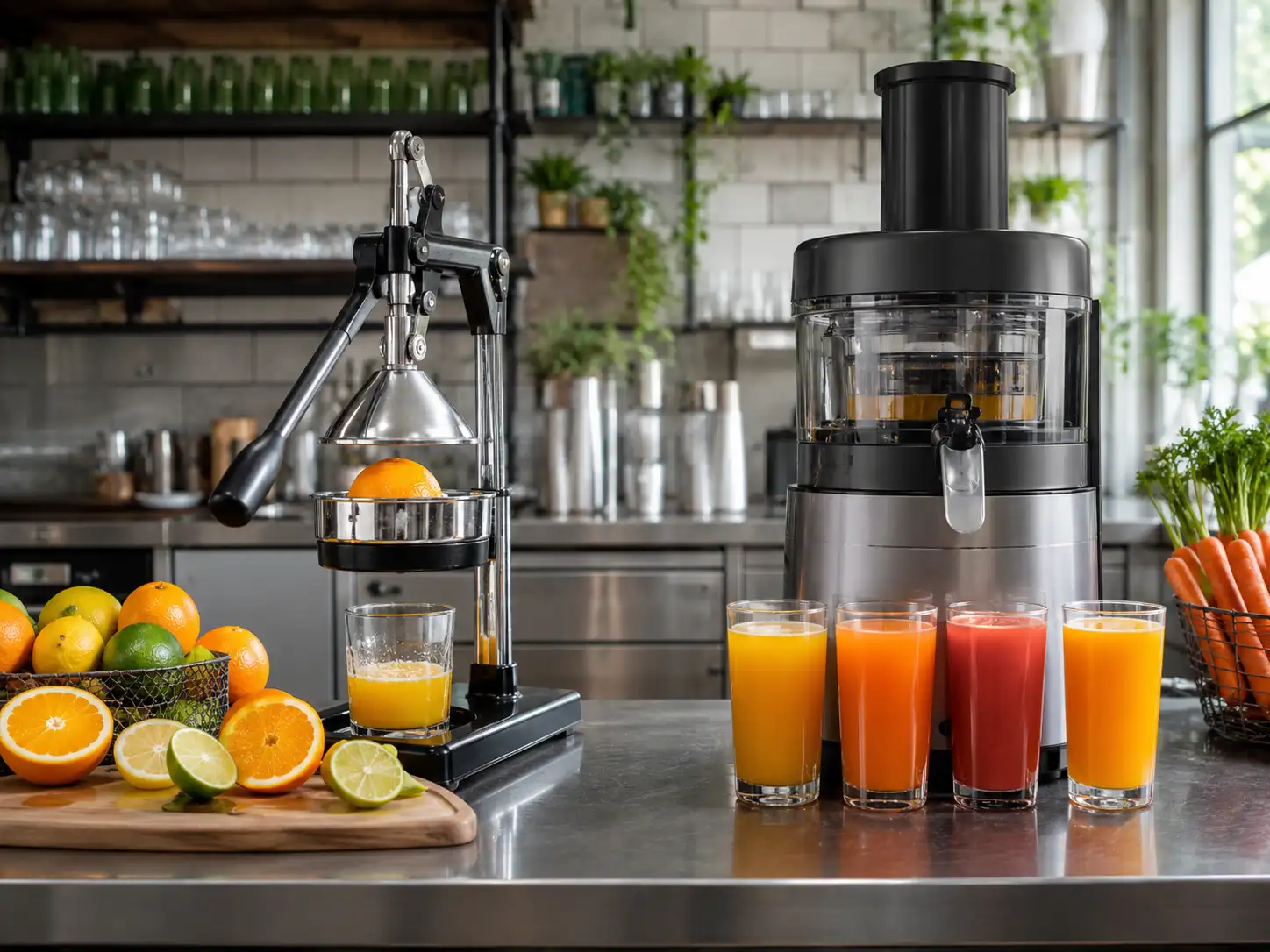
Manual juicer and electric juicer compared for commercial beverage preparation

Manual Juicer vs Electric Juicer for Commercial Use: Cost vs Efficiency

Choosing between a manual juicer and an electric juicer is not only a product decision. For a business, it is a workflow decision. A manual juicer often looks attractive because it is simple, quiet, compact, and affordable. An electric juicer usually costs more, but it can save time, reduce staff effort, improve output speed, and

Manual Juicer vs Electric Juicer for Commercial Use: Cost vs Efficiency Read More »
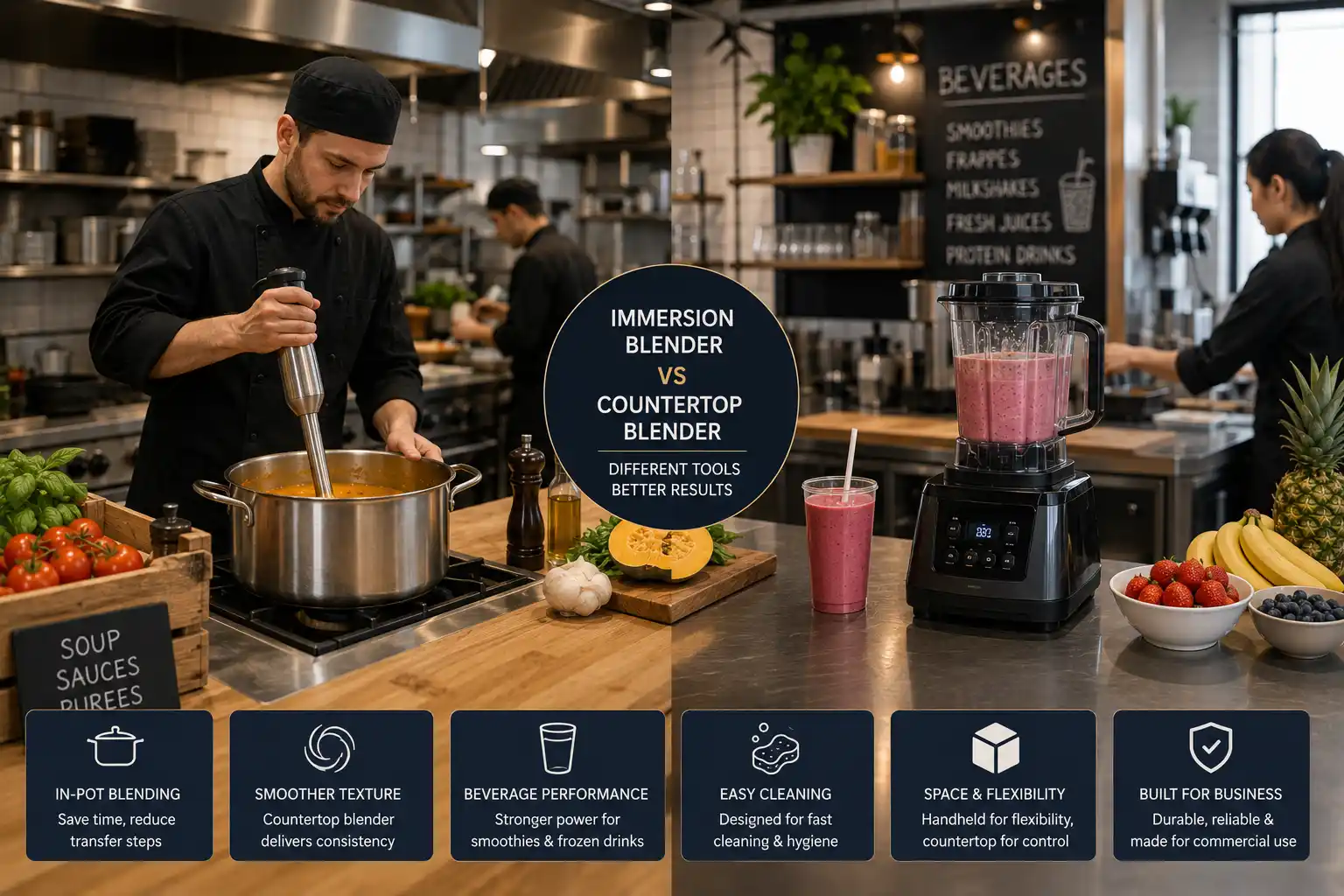
Immersion blender and countertop blender used in a restaurant kitchen workflow comparison

Immersion Blender vs Countertop Blender: Which Is More Practical for Restaurants?

Choosing between an immersion blender and a countertop blender sounds like a simple equipment question. Both can blend soup. Both can handle sauces. Both can help a kitchen turn cooked ingredients into smoother textures. In a restaurant, however, the better choice depends less on the appliance name and more on the workflow. An immersion blender

Immersion Blender vs Countertop Blender: Which Is More Practical for Restaurants? Read More »

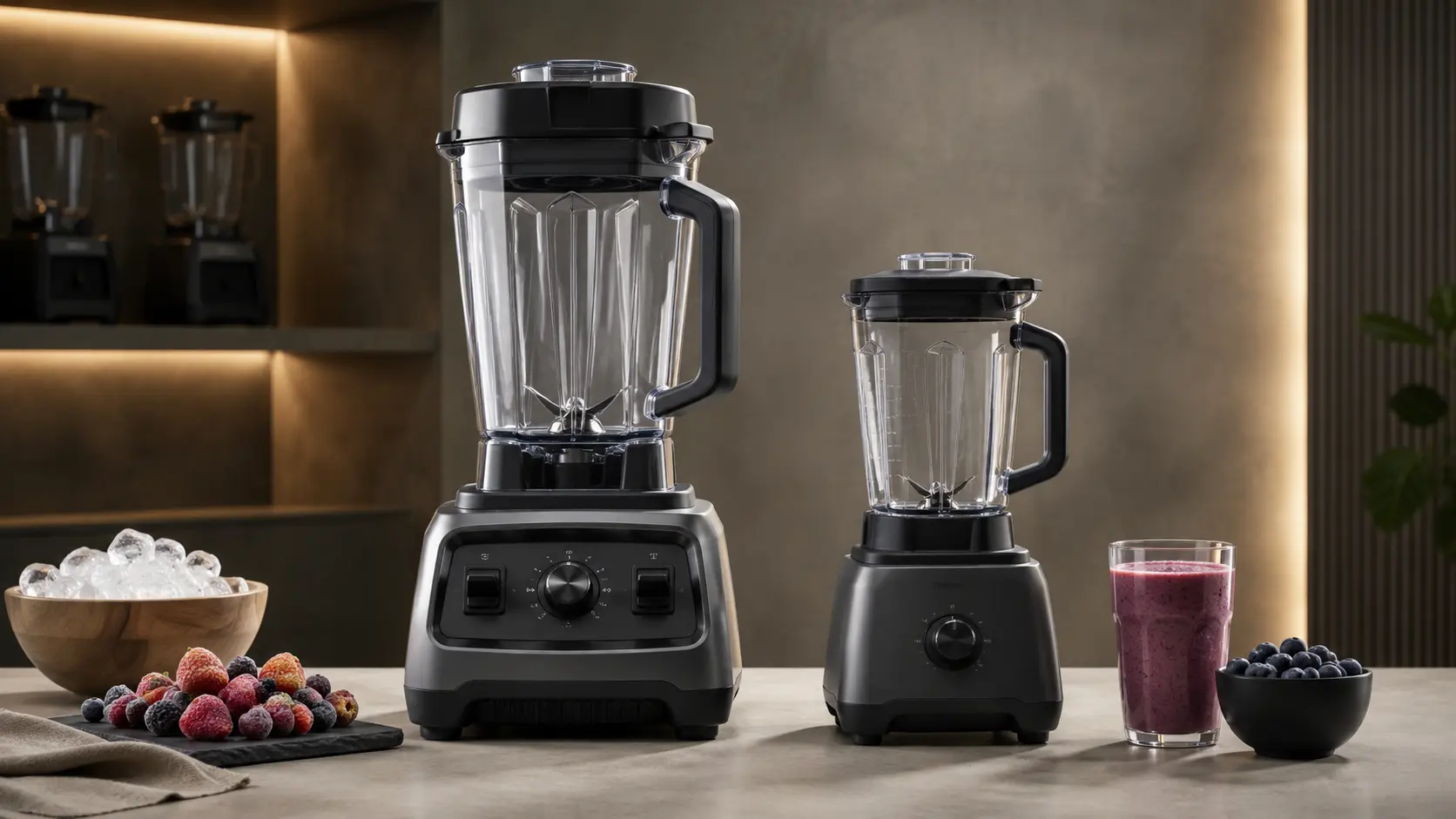
Heavy-duty blender and standard blender compared for commercial kitchen equipment selection.

Heavy-Duty Blender vs Standard Blender: When Does Power Really Matter?

A blender’s power rating looks simple on paper. One model says 800 watts. Another says 1,500 watts. A commercial model may mention horsepower, RPM, or ice-crushing performance. For many buyers, the instinct is to choose the highest number and assume it must be the better machine. In real business use, blender power is not that

Heavy-Duty Blender vs Standard Blender: When Does Power Really Matter? Read More »

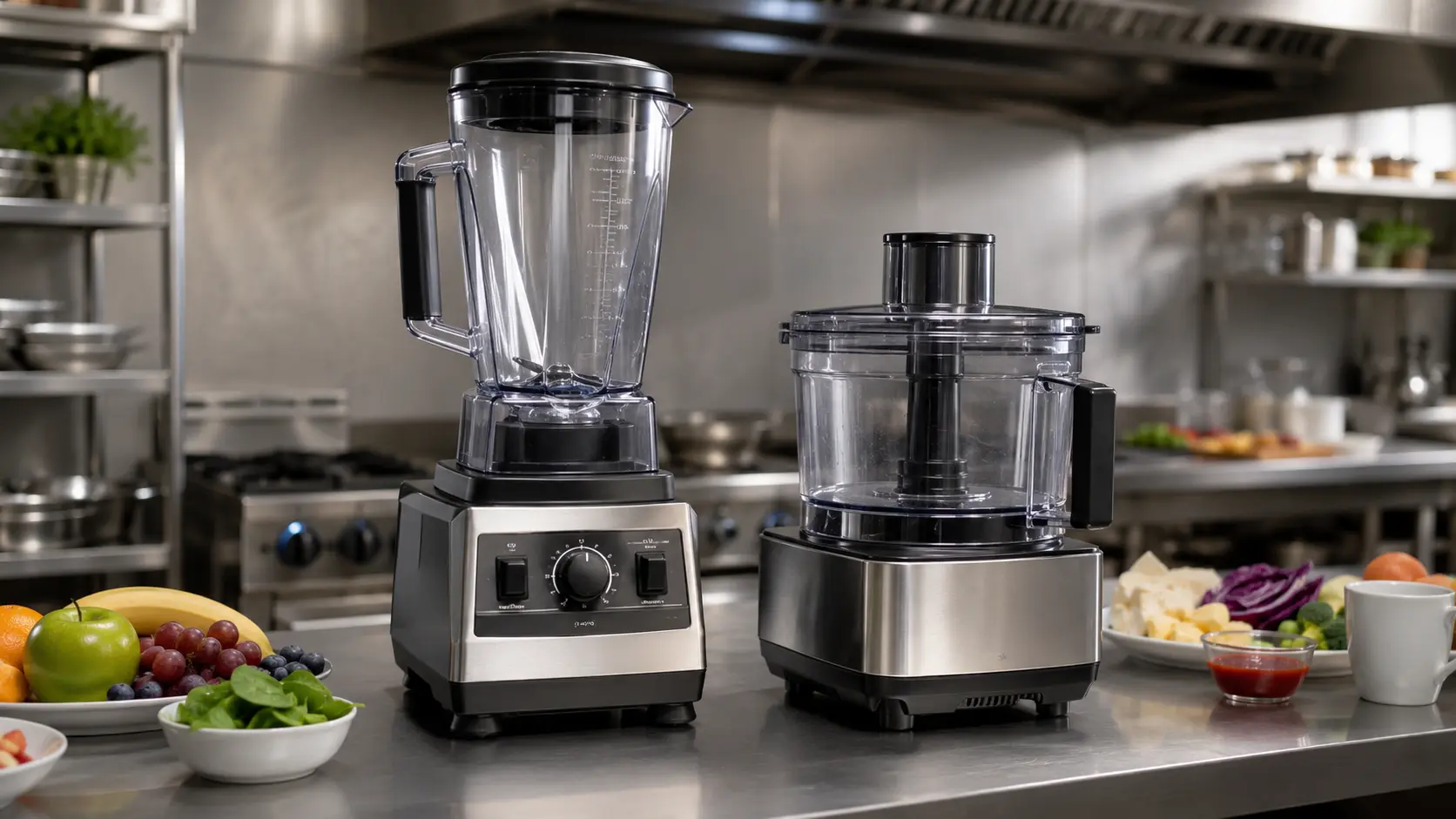
Tall blender jar and wide food processor bowl design compared for liquid blending and solid prep.

Commercial Blender vs Food Processor: Which One Do You Really Need?

Choosing between a commercial blender and a food processor seems simple at first. Both machines have motors. Both use sharp blades. Both can break down ingredients. In a product photo, they may even look like they serve the same purpose. In a real business kitchen, however, they solve very different problems. A commercial blender is

Commercial Blender vs Food Processor: Which One Do You Really Need? Read More »

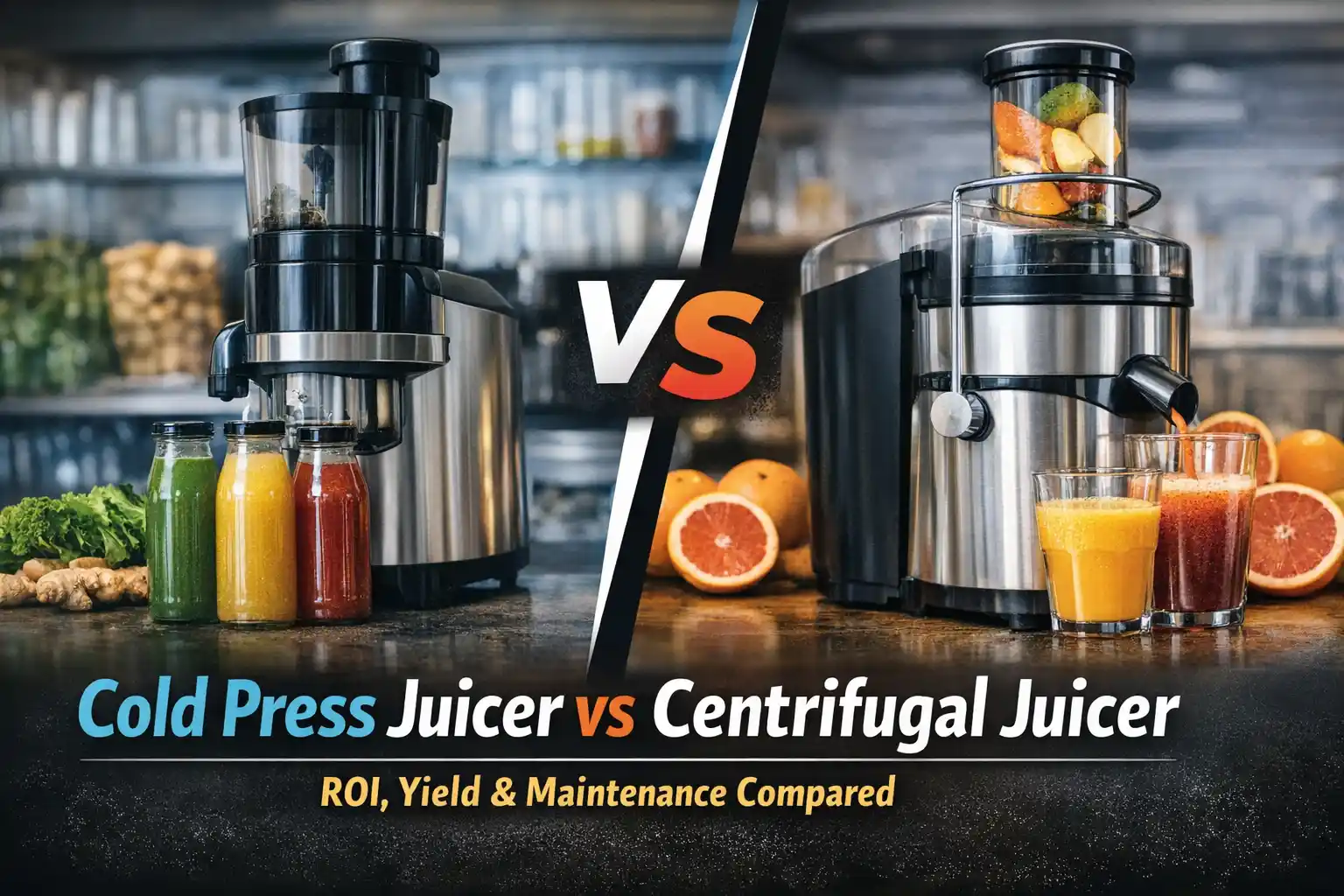
Cold press juicer vs centrifugal juicer comparison for juice bars, cafés, and commercial beverage businesses.

Cold Press Juicer vs Centrifugal Juicer for Business: ROI, Yield & Maintenance Compared

Fresh juice can be profitable in several different business models, but not every juice operation needs the same type of machine. A premium bottled juice brand, a fast-moving café counter, a hotel breakfast station, and a wellness-focused juice bar may all sell juice, but they are not optimizing for the same thing. That is why

Cold Press Juicer vs Centrifugal Juicer for Business: ROI, Yield & Maintenance Compared Read More »

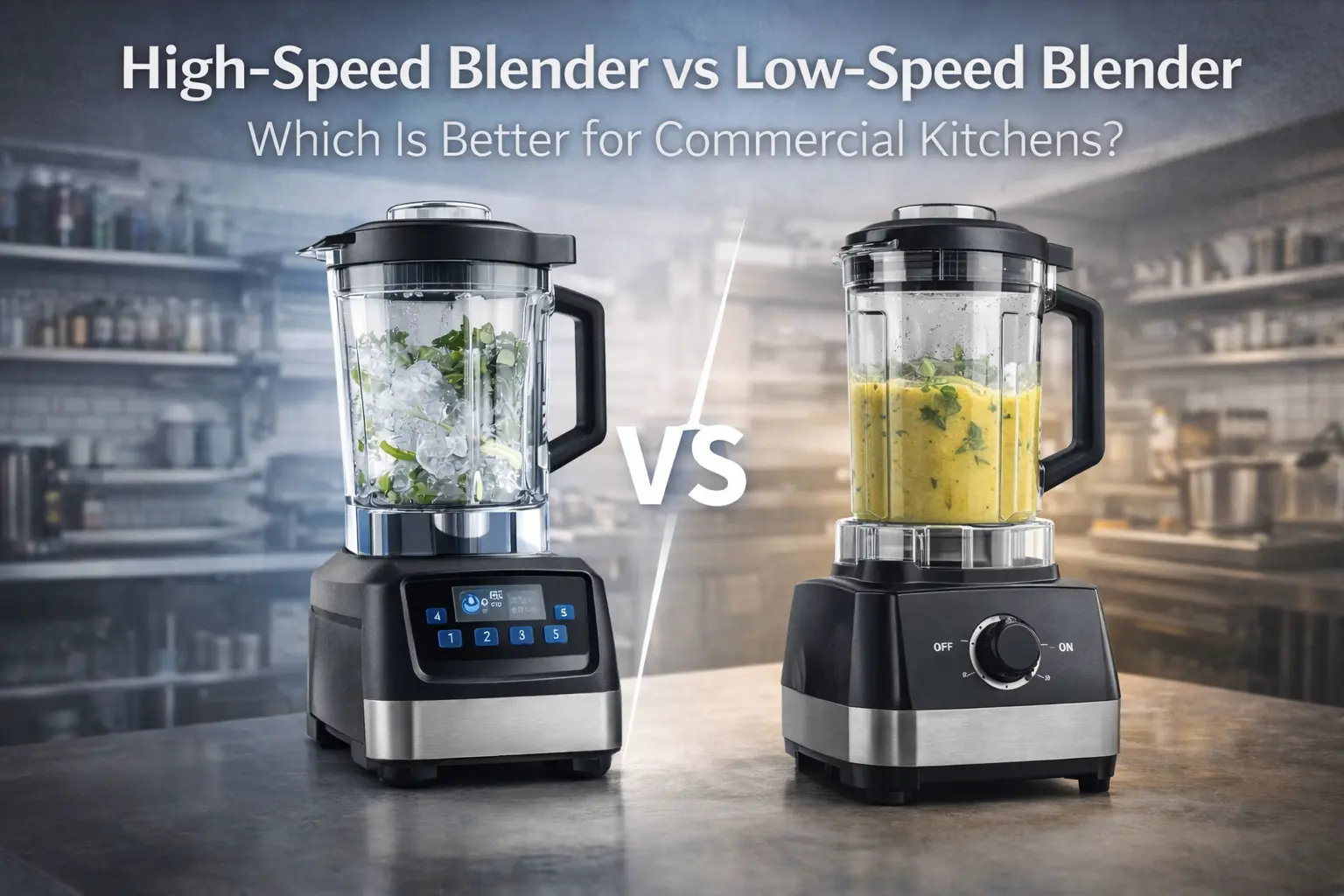
High-speed blender vs low-speed blender comparison for commercial kitchens and foodservice operations.

High-Speed Blender vs Low-Speed Blender: Which Is Better for Commercial Kitchens?

Key Takeaways High-speed blender vs low-speed blender is a more important decision than it first appears. Product marketing often reduces the discussion to RPM or wattage, but commercial buyers need to look at the bigger picture. Blender speed affects throughput, texture, heat buildup, ingredient handling, cleaning workflow, noise, and long-term durability. For cafés, restaurants, hotel

High-Speed Blender vs Low-Speed Blender: Which Is Better for Commercial Kitchens? Read More »

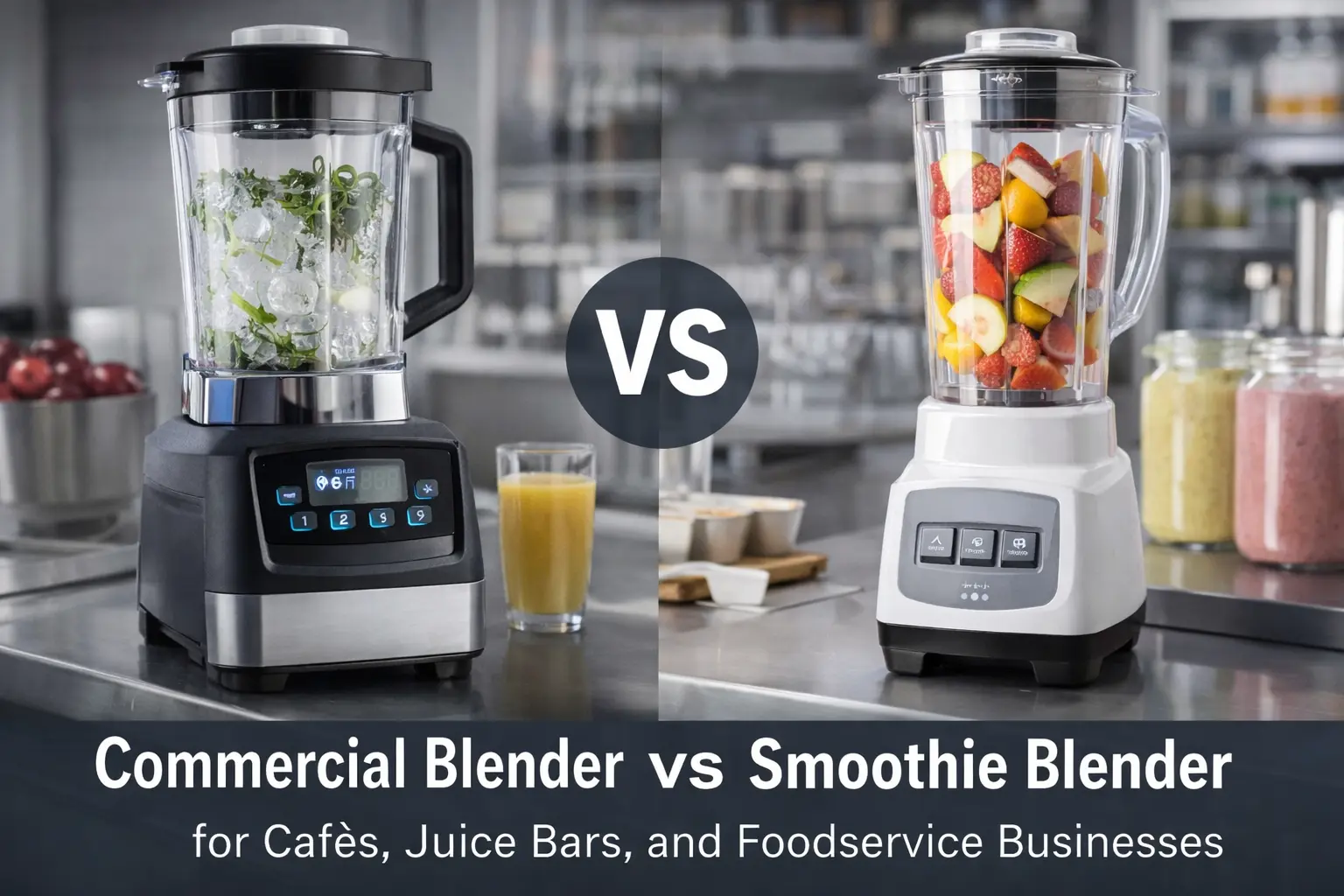
Commercial blender vs smoothie blender comparison for cafés, juice bars, and foodservice businesses.

Commercial Blender vs Smoothie Blender: What’s the Real Difference for Businesses?

Key Takeaways When buyers compare a commercial blender with a smoothie blender, the two categories can look similar in product listings. Both are shown making frozen drinks, fruit blends, and milk-based beverages. For businesses, however, the real difference becomes much clearer once you look at workload, durability, menu flexibility, cleaning efficiency, noise, and long-term operating

Commercial Blender vs Smoothie Blender: What’s the Real Difference for Businesses? Read More »

Side-by-side comparison of a Ninja home blender and a commercial-grade blender, with clear differences in size, motor housing, and durability.

Ninja vs Commercial Blenders: Why Home Brands Can’t Handle Heavy-Duty Use

Key Takeaways Ninja blenders and commercial blenders serve different purposes in kitchens. Ninja blenders excel at home use with simple controls and a small footprint. On the other hand, commercial blenders provide more power, longer run times, and larger jars for heavy use in restaurants or cafes. Both blend ice, fruits, and vegetables, but their features, build, and price

Ninja vs Commercial Blenders: Why Home Brands Can’t Handle Heavy-Duty Use Read More »

Comparison of Vitamix and Waring commercial blenders in a professional kitchen, highlighting heavy-duty performance differences.

Vitamix vs Waring: Which Is Better for Heavy-Duty Commercial Use?

Introduction Commercial kitchens demand speed, consistency, and long-term reliability. For decades, Vitamix and Waring have been two of the most widely adopted brands in cafés, bars, and high-volume foodservice operations, with product lines specifically designed for continuous heavy-duty use. When commercial buyers are looking at Vitamix vs Waring, heavy-duty performance, durability and long-term value are

Vitamix vs Waring: Which Is Better for Heavy-Duty Commercial Use? Read More »

Seraphinite AcceleratorOptimized by Seraphinite Accelerator
Turns on site high speed to be attractive for people and search engines.