Custom Product Development Cost Breakdown: Engineering, Prototypes, Tooling, Testing and Unit Cost
A stage-by-stage framework for separating engineering, prototypes, tooling, testing, pilot production and recurring product cost.
 Skip to content

For brands, importers, distributors and product developers, successful manufacturing depends on more than choosing a finished product. It requires clear product requirements, practical development workflows, suitable materials and processes, capable suppliers, quality planning and controlled production decisions.
This category brings together guidance for custom product development and manufacturing, as well as OEM and private-label appliance projects. The content covers custom products, tooling, prototypes, metal and plastic components, electromechanical assemblies, supplier evaluation, production planning and selected commercial blender and juicer programs.
Start with the articles below to understand how a product can move from an idea, sample or drawing through DFM, tooling, prototype verification, pilot production and controlled mass production.
Planning a custom product or private-label appliance project? ElectMix can review project fit and coordinate the relevant development and manufacturing route for suitable B2B projects involving appliances, tooling, components, metal and plastic structures, assembly and production planning. The exact process, MOQ, compliance scope and responsibilities are confirmed project by project.
Looking for a wider content hub? Visit the ElectMix Knowledge Center to explore all categories, recommended resources and practical articles for B2B buyers.

A stage-by-stage framework for separating engineering, prototypes, tooling, testing, pilot production and recurring product cost.

Understand why custom manufacturing MOQ is created by tooling, materials, components, variants, production setup and quality requirements.
Custom Manufacturing MOQ Explained: What Sets the Minimum Order Quantity? Read More »

A quote-ready RFQ connects product requirements with measurable manufacturing assumptions. A useful manufacturing quotation begins before a supplier calculates a unit price. It begins when the buyer defines what must be made, how the product will be used, what must be verified, and which assumptions are still open. If those inputs are incomplete, a manufacturer

A practical supplier-evaluation framework for custom products that combine tooling, metal, plastic, components, assembly and testing—with 15 questions to ask before committing.
How to Choose a Custom Manufacturing Partner: 15 Questions Before Tooling Read More »

A practical stage-gate roadmap for moving a custom product from proof of concept through engineering samples, tooling, pilot production, validation and controlled mass production.
Prototype to Mass Production: A Stage-Gate Guide for Custom Products Read More »

A practical B2B guide to custom mold development, including DFM, tool specification, machining, trial samples, correction cycles, approval criteria, ownership and production release.
Custom Mold Development: Process, Cost Drivers and Trial Sample Approval Read More »

A buyer-focused explanation of what a DFM review should cover before tooling, including plastic parts, sheet metal, interfaces, assembly, materials, inspection and change control.
Design for Manufacturing Before Tooling: A Practical DFM Guide for Buyers Read More »

A buyer-focused guide to turning an idea, sample or drawing into a defined custom manufacturing project, with practical requirements, feasibility gates, tooling decisions and RFQ preparation.
How to Get a Custom Product Manufactured: A Practical Guide for B2B Buyers Read More »
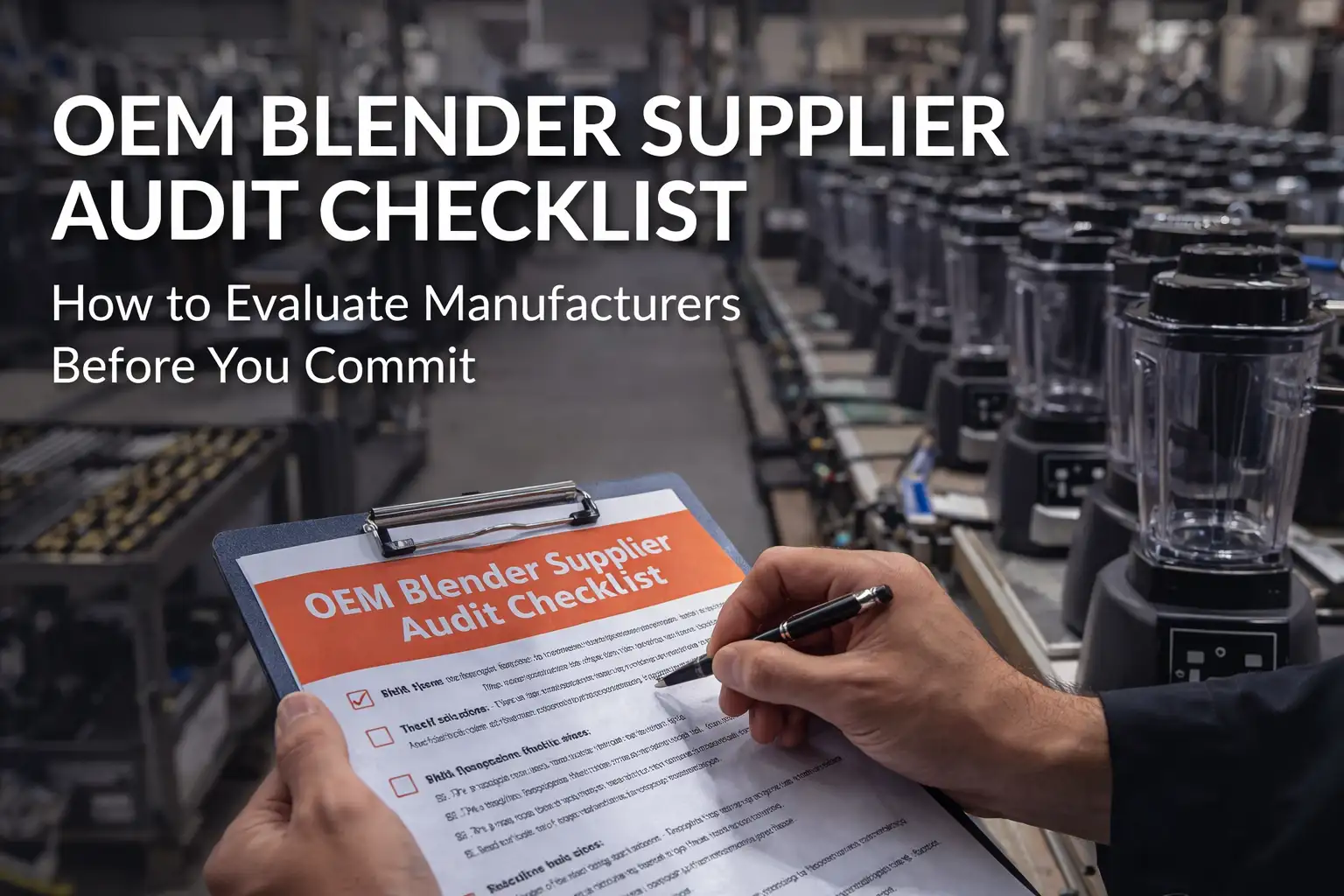
Key Takeaways Introduction: Why Auditing an OEM Blender Supplier Matters More Than Ever With manufacturing where it is, you cannot depend on a supplier’s history, fancy factory pictures in trade magazines, or a handful of reference calls. Here’s why auditing an OEM blender supplier matters more than ever and how many B2B buyers still fail
OEM Blender Supplier Audit Checklist: How to Evaluate Manufacturers Before You Commit Read More »
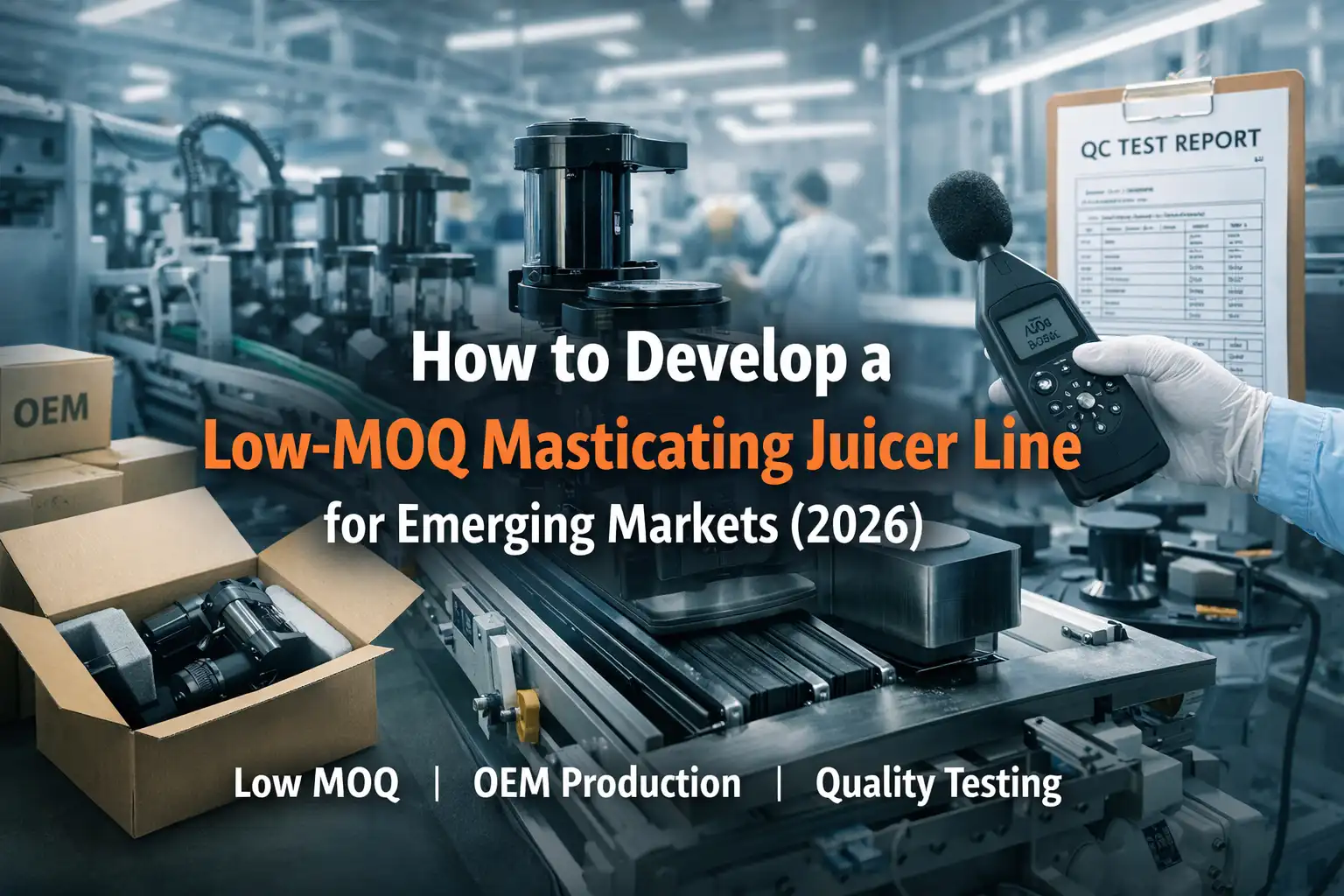
Key Takeaways Low-MOQ masticating juicer programs allow distributors and emerging brands to test fragmented, price-sensitive markets without locking excessive capital into inventory. In 2026, this approach has become less about ordering “small quantities” and more about building repeatable OEM structures that can scale once demand is proven. Low MOQ does not mean one-off customization or
How to Develop a Low-MOQ Masticating Juicer Line for Emerging Markets in 2026 Read More »
 Optimized by Seraphinite Accelerator