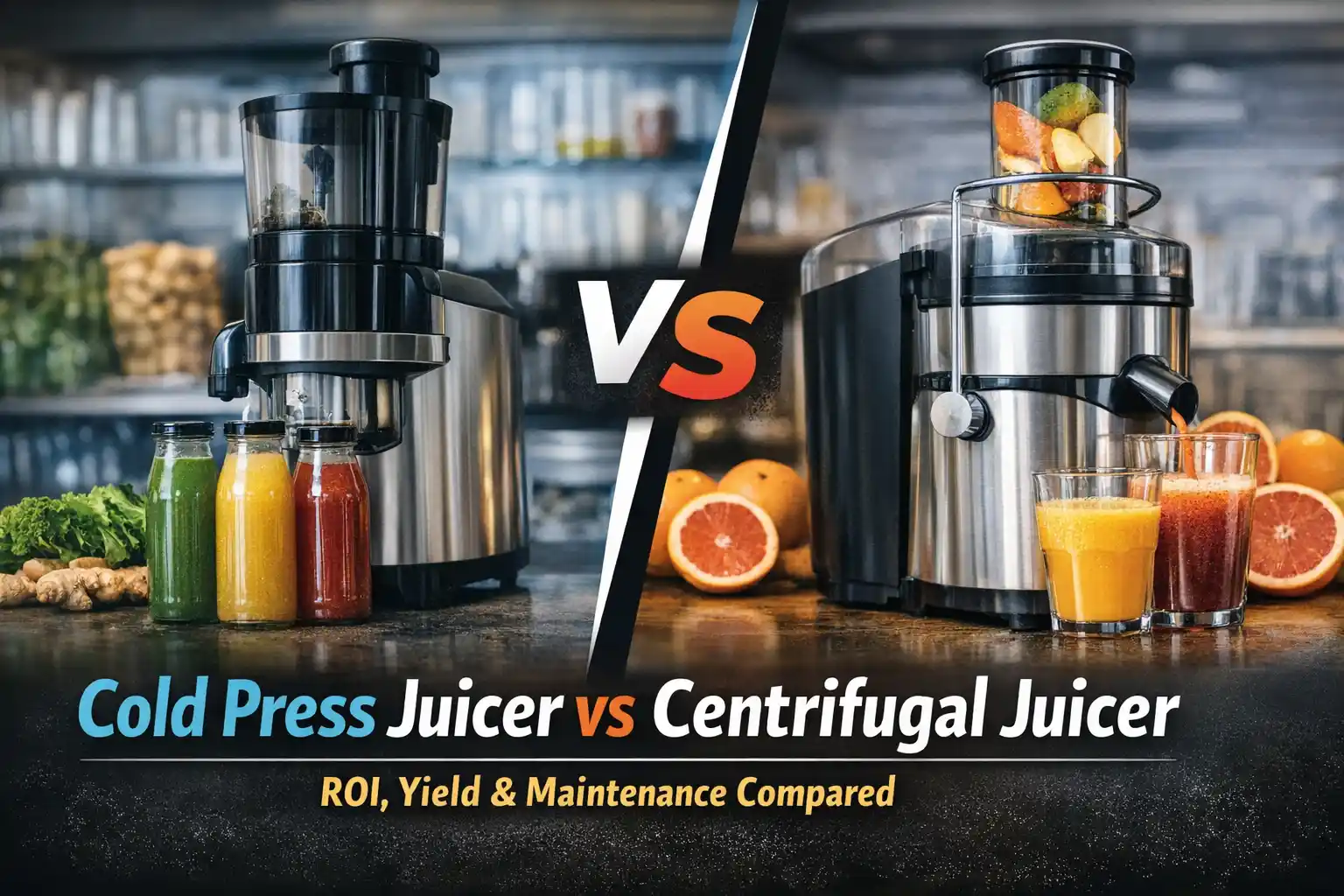
Cold press juicer vs centrifugal juicer comparison for juice bars, cafés, and commercial beverage businesses.

Cold Press Juicer vs Centrifugal Juicer for Business: ROI, Yield & Maintenance Compared

Fresh juice can be profitable in several different business models, but not every juice operation needs the same type of machine. A premium bottled juice brand, a fast-moving café counter, a hotel breakfast station, and a wellness-focused juice bar may all sell juice, but they are not optimizing for the same thing. That is why

Cold Press Juicer vs Centrifugal Juicer for Business: ROI, Yield & Maintenance Compared Read More »
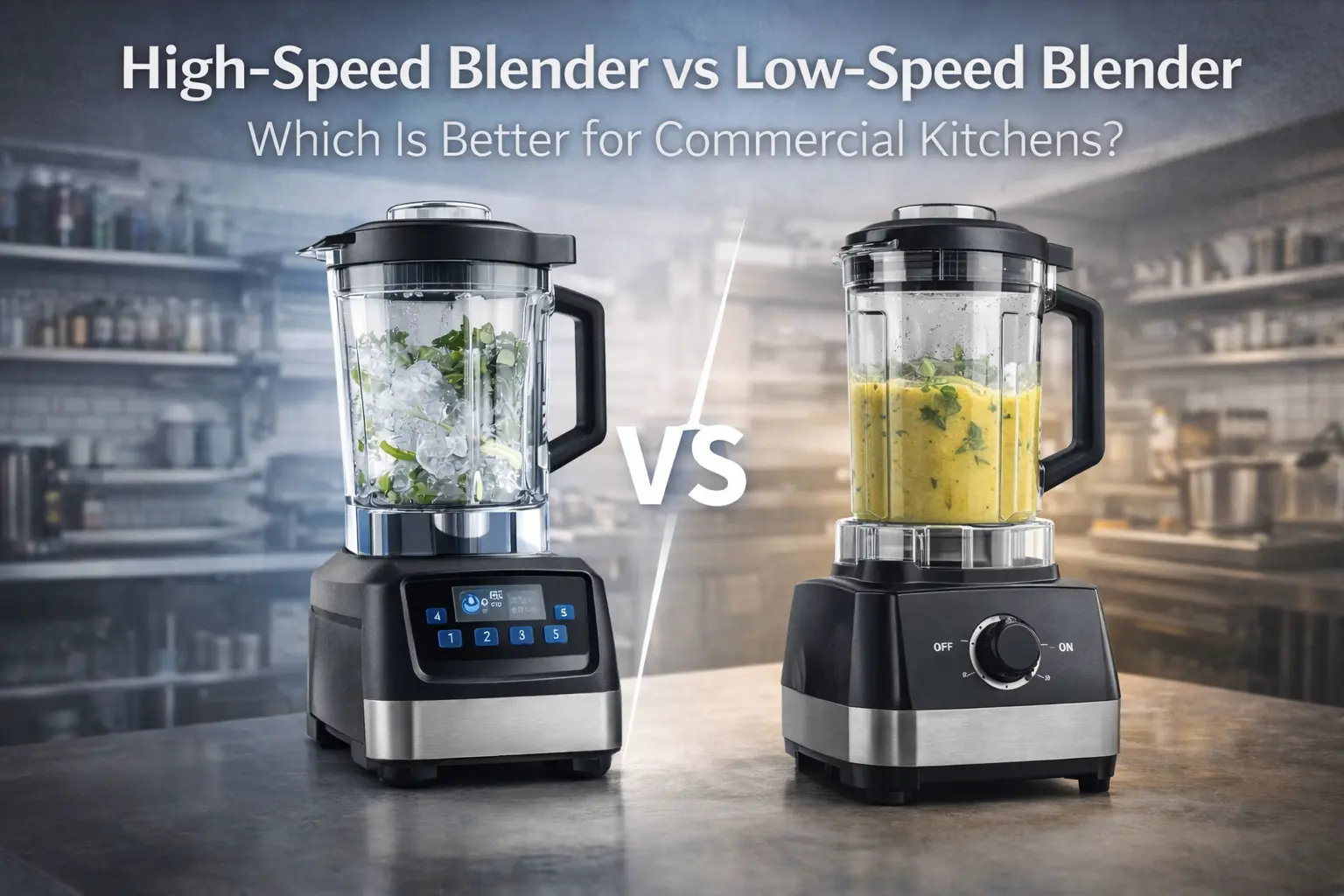
High-speed blender vs low-speed blender comparison for commercial kitchens and foodservice operations.

High-Speed Blender vs Low-Speed Blender: Which Is Better for Commercial Kitchens?

Key Takeaways High-speed blender vs low-speed blender is a more important decision than it first appears. Product marketing often reduces the discussion to RPM or wattage, but commercial buyers need to look at the bigger picture. Blender speed affects throughput, texture, heat buildup, ingredient handling, cleaning workflow, noise, and long-term durability. For cafés, restaurants, hotel

High-Speed Blender vs Low-Speed Blender: Which Is Better for Commercial Kitchens? Read More »

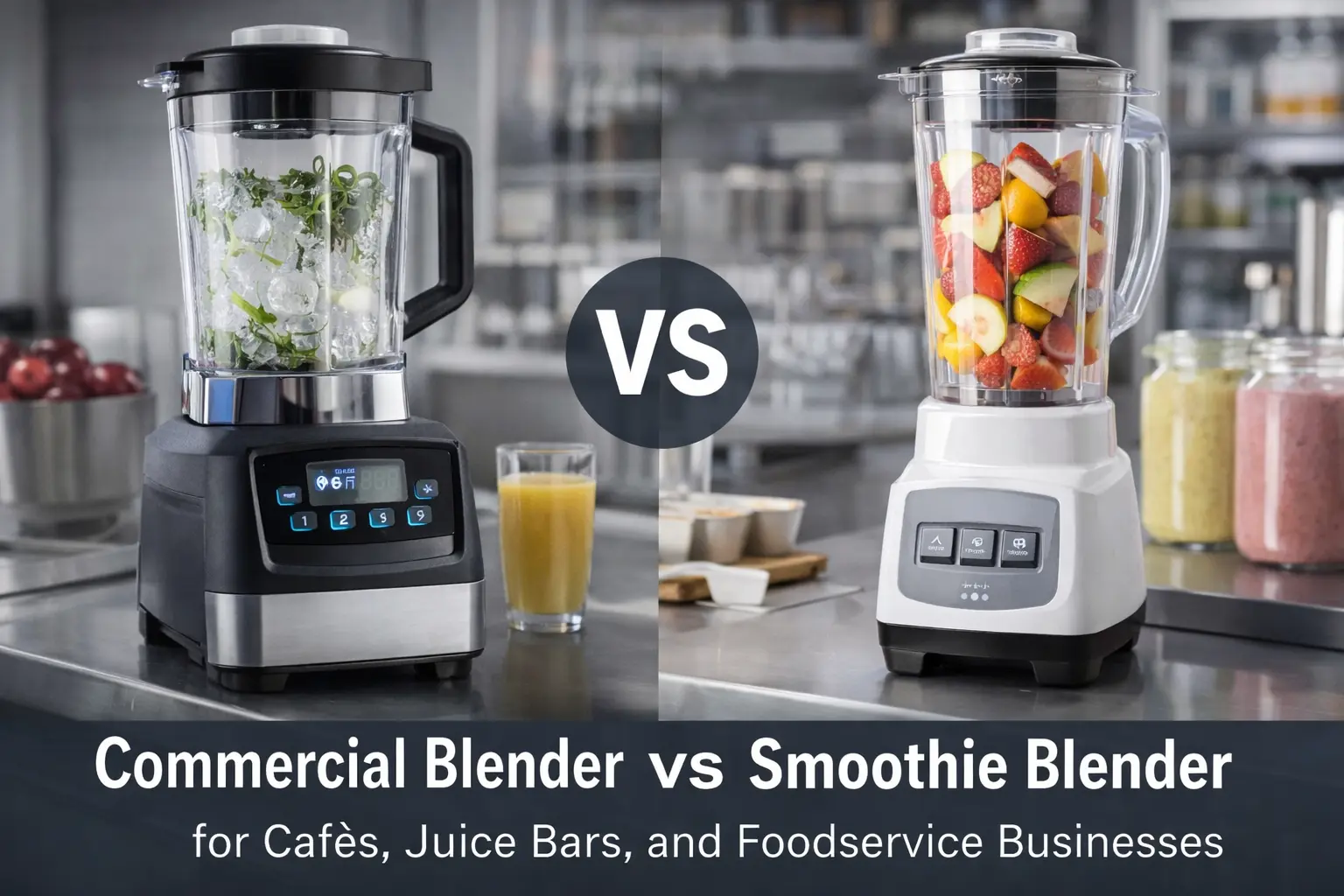
Commercial blender vs smoothie blender comparison for cafés, juice bars, and foodservice businesses.

Commercial Blender vs Smoothie Blender: What’s the Real Difference for Businesses?

Key Takeaways When buyers compare a commercial blender with a smoothie blender, the two categories can look similar in product listings. Both are shown making frozen drinks, fruit blends, and milk-based beverages. For businesses, however, the real difference becomes much clearer once you look at workload, durability, menu flexibility, cleaning efficiency, noise, and long-term operating

Commercial Blender vs Smoothie Blender: What’s the Real Difference for Businesses? Read More »

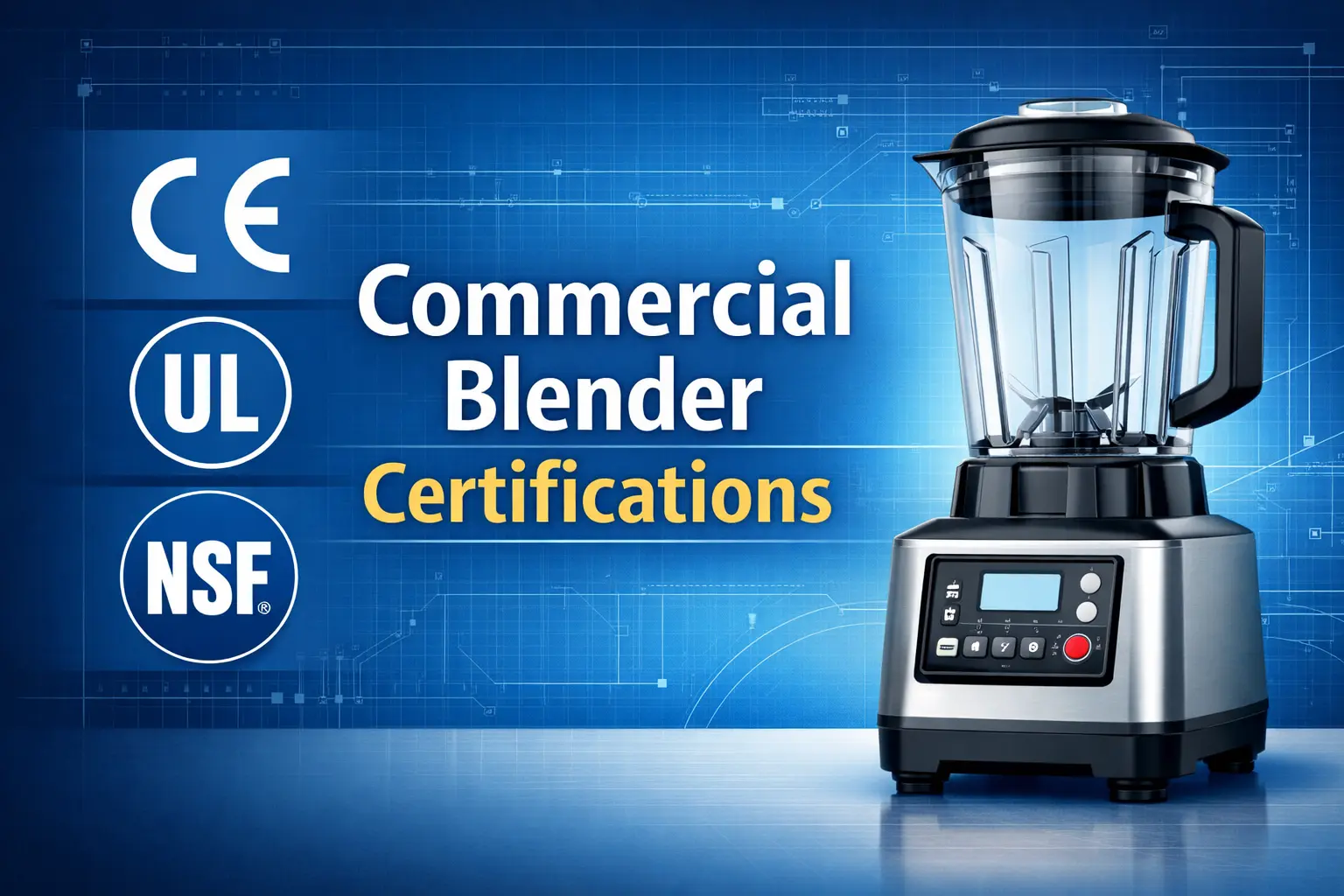
Commercial blender certifications including CE UL and NSF compliance for global distributors.

Commercial Blender Certifications Explained: CE, UL, NSF & Global Compliance Guide

Key Takeaways Why Certifications Matter in Commercial Blender Procurement Certifications provide purchasers explicit evidence that a commercial blender is safe, can be legally used in their jurisdiction, and is designed for intense daily efforts in a bustling kitchen or bar. They transform ambiguous assertions into marks that a neutral party has examined and verified. UL

Commercial Blender Certifications Explained: CE, UL, NSF & Global Compliance Guide Read More »

OEM blender supplier audit checklist covering factory inspection, quality control, and manufacturing evaluation.

OEM Blender Supplier Audit Checklist: How to Evaluate Manufacturers Before You Commit

Key Takeaways Introduction: Why Auditing an OEM Blender Supplier Matters More Than Ever With manufacturing where it is, you cannot depend on a supplier’s history, fancy factory pictures in trade magazines, or a handful of reference calls. Here’s why auditing an OEM blender supplier matters more than ever and how many B2B buyers still fail

OEM Blender Supplier Audit Checklist: How to Evaluate Manufacturers Before You Commit Read More »

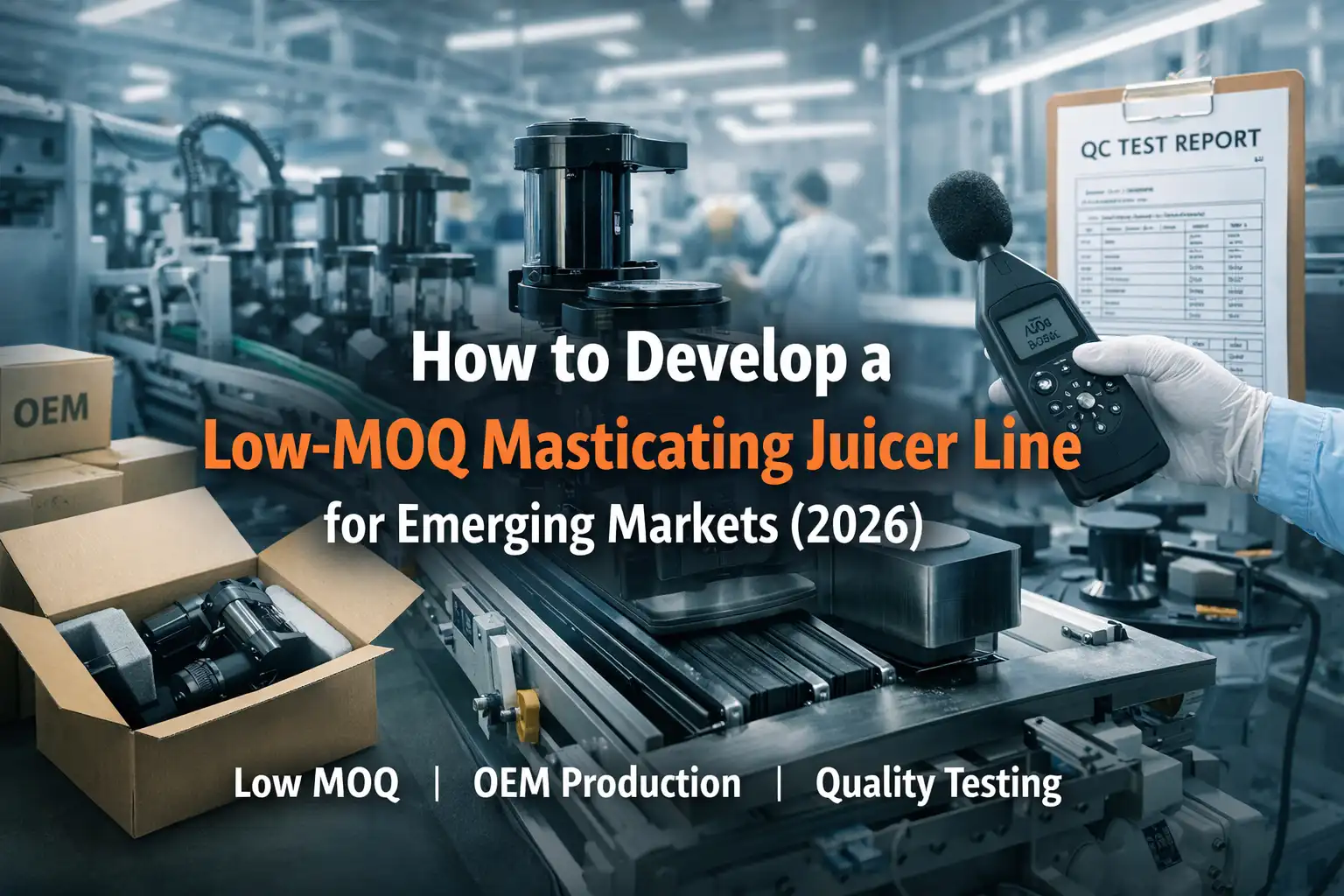
Low MOQ masticating juicer OEM design with modular components for emerging markets.

How to Develop a Low-MOQ Masticating Juicer Line for Emerging Markets in 2026

Key Takeaways Low-MOQ masticating juicer programs allow distributors and emerging brands to test fragmented, price-sensitive markets without locking excessive capital into inventory. In 2026, this approach has become less about ordering “small quantities” and more about building repeatable OEM structures that can scale once demand is proven. Low MOQ does not mean one-off customization or

How to Develop a Low-MOQ Masticating Juicer Line for Emerging Markets in 2026 Read More »

Modular OEM commercial blender design with replaceable components in a professional foodservice environment.

Modular OEM Blender Design: A Hidden Profit Driver for Distributors

Commercial blending is rarely lost on performance alone. Most high-power units can crush ice, handle frozen fruit, and run smoothie programs when they are new. The margin problems for distributors typically show up later—after months of daily cycles—when wear, service delays, and inconsistent spare-part availability begin to affect customer uptime. This is why modular OEM

Modular OEM Blender Design: A Hidden Profit Driver for Distributors Read More »

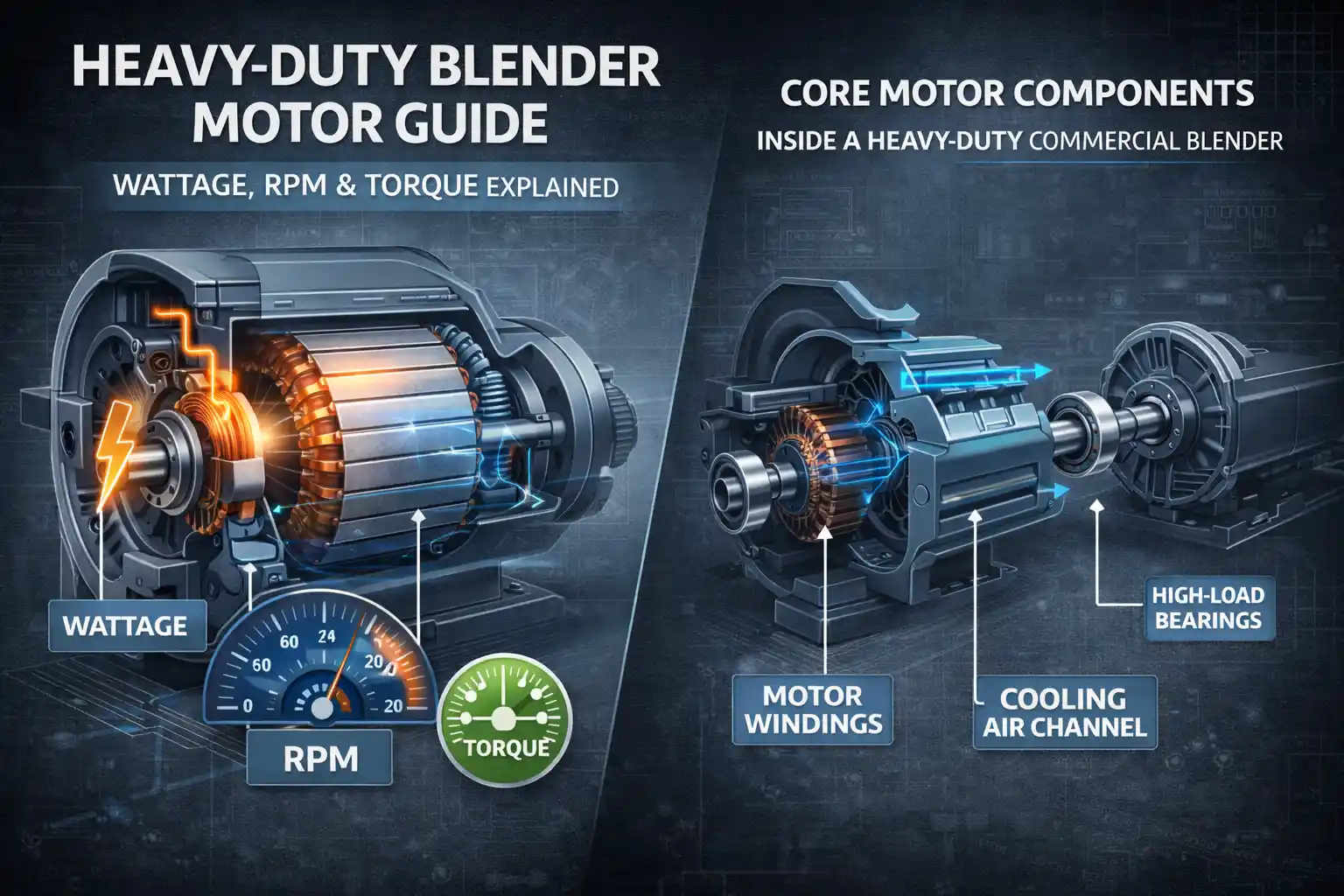
Heavy-duty commercial blender motor diagram explaining wattage, RPM, and torque differences.

Heavy-Duty Blender Motor Guide: Wattage, RPM & Torque Explained

Key Takeaways A heavy duty blender motor provides more power and longer run time than a standard blender motor. These motors use robust components that withstand dense blends and everyday use. Many high-end blenders for your home and work kitchen use these motors for silky shakes, nut butters, and soups. Speed settings and cooling fans help keep

Heavy-Duty Blender Motor Guide: Wattage, RPM & Torque Explained Read More »

3HP+ commercial blender designed for high-volume foodservice operations in 2026.

Why 3HP+ Commercial Blenders Are Becoming the Standard in 2026

Key Takeaways 3hp commercial blenders are powerful kitchen appliances designed to blend, mix, and crush big batches of food quickly and effortlessly. Found in establishments such as restaurants, cafes, and juice bars, they confront challenging tasks such as ice crushing, nut blending, and smooth purees. All these blenders tend to be equipped with powerful motors

Why 3HP+ Commercial Blenders Are Becoming the Standard in 2026 Read More »

Side-by-side comparison of a Ninja home blender and a commercial-grade blender, with clear differences in size, motor housing, and durability.

Ninja vs Commercial Blenders: Why Home Brands Can’t Handle Heavy-Duty Use

Key Takeaways Ninja blenders and commercial blenders serve different purposes in kitchens. Ninja blenders excel at home use with simple controls and a small footprint. On the other hand, commercial blenders provide more power, longer run times, and larger jars for heavy use in restaurants or cafes. Both blend ice, fruits, and vegetables, but their features, build, and price

Ninja vs Commercial Blenders: Why Home Brands Can’t Handle Heavy-Duty Use Read More »