Skip to content

- Key Takeaways
- What Is a Smoothie Blender?
- What Is a Commercial Juicer?
- Nutritional Output: Fiber vs Bioavailability
- Equipment & Maintenance Considerations
- Ideal Use Scenarios
- Operational Speed & Customer Flow
- Menu Compatibility
- Pricing & ROI Comparison
- OEM Equipment from ElectMix
- Conclusion
- Frequently Asked Questions
Key Takeaways
- Smoothie blenders are ideal for fiber-rich beverages like protein shakes and fruit smoothies.
- Commercial juicers excel in juice bars and detox programs for pulp-free, nutrient-dense drinks.
- Your equipment choice should align with your beverage menu, business model, and customer expectations.
- OEM customization is available for both categories through manufacturers like ElectMix.
In the booming global beverage industry, the difference between a well-equipped juice bar and a slow starter often lies in the right machinery. Whether you’re starting a smoothie café, a cold-pressed juice brand, or an all-purpose wellness bar, understanding the differences between smoothie blenders and commercial juicers is essential.
While both appliances process fruits and vegetables into drinkable form, their functions, outcomes, and business use cases differ significantly.
What Is a Smoothie Blender?
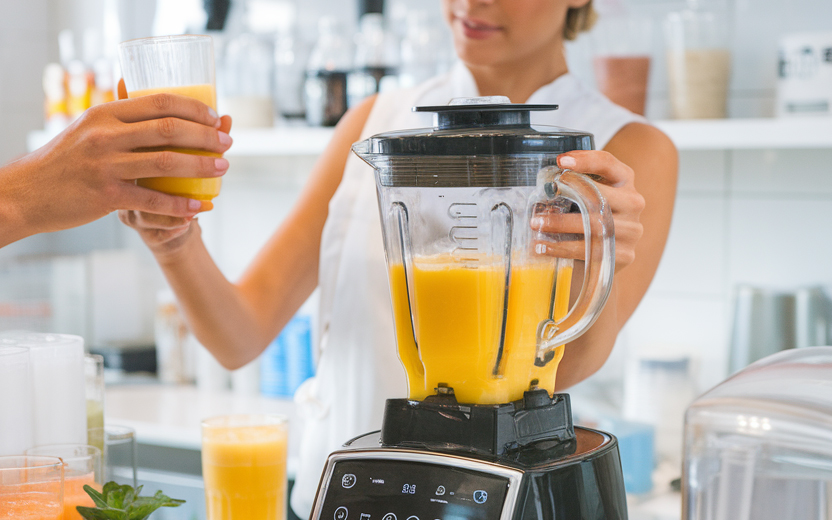
A smoothie blender is an everyday kitchen appliance. It quickly turns whole foods like fruit, leafy greens, and ice into thick, creamy drinks. These machines are best known for pulverizing fibrous ingredients. They provide an innovative way for consumers to enjoy all the nutrients and fiber that naturally occur in raw plant foods.
These days, consumers often think of smoothies as an easy way to get more fruits and veggies into their day. This can increase their nutrient density and satiety!
Blending isn’t only for smoothies and cocktails. It’s not just the texture, it’s the technique. With high-performance smoothie blenders, you can achieve an impossibly silky-smooth blend. Or, they can keep a little texture for a more rustic, chunkier approach, if you’re into that.
Unlike juicing, which discards all the pulp and fiber, this process retains everything fibrous and pulpy. Since they are pre-digested, they can make individuals feel fuller for longer. Plus, they often improve the bioavailability of other nutrients by mechanically reducing food into small particulate sizes.
Smoothie blenders are good for other non-drink applications too. You’ll find yourself reaching for them to puree soup, sauce, and dip, and even churn out frozen dessert. There are several types: high-speed blenders for heavy-duty jobs, personal blenders for single servings, and hand blenders for quick, small tasks.
Each type has its own advantages, meaning you can more easily find one that suits your needs.
Key Functions
- Retains full fiber content
- Suitable for thick smoothies and protein shakes
- Supports ice crushing, nut blending, and powder incorporation
- Faster processing time (30–60 seconds)
What Is a Commercial Juicer?
A commercial juicer is an appliance specifically designed to extract juice from fruits and vegetables commercially. These machines are the workhorse of the restaurant, hotel, and juice bar industries. They’re great at pumping out beautiful fresh juice in a hurry and at high volume!
They accomplish this by separating the juice from the pulp, producing a silky smooth beverage with lower fiber content. This patented process results in a smooth, translucent juice that is very drinkable. It has a very different texture, unlike what you’d get from blending it up in a blender.
There are two main types of commercial juicers: centrifugal and cold-press. Centrifugal juicers are the ones that have a sharp, spinning blade that chops up your fruits and veggies and forces the juice through a mesh filter.
These juicers operate quickly and are suitable for locations where speed is most important. One thing to be careful about is that the fast spinning creates heat as well. This heat can destroy many vital nutrients and enzymes in the juice.
Cold-press juicers—which are also known as masticating juicers—do not use high speed blades, but rather crush and press the produce. This process is more time-consuming but produces higher quality juice with more of the nutrients and goodness intact.
Because of this, it typically achieves a better yield. Both styles are available in models with large capacity hoppers, variable speeds, and other features that facilitate simplified cleaning processes.
Juicing has recently gained popularity! People want easy, convenient ways to eat more vegetables and fruits. A good commercial juicer should be able to juice oranges, apples, leafy greens, carrots, and much more.
They are indispensable in producing juices designed for detoxing or for those with unique dietary requirements. Deciding which juicer is best for you comes down to what you want to juice, how often, and your budget or kitchen space.
Key Functions:
- Extracts pulp-free juice
- Maintains enzymes, vitamins, and antioxidants
- Ideal for leafy greens, beets, and citrus
- Slower process (2–4 minutes per serving)
Nutritional Output: Fiber vs Bioavailability

Unlike juice, smoothies pulverize the entire fruit or vegetable, so you’re not missing out on any of the fiber your digestive system craves for optimal gut health. The pulp and skin remain in the puree. This results in a much more satisfying drink that keeps you feeling satisfied and your blood sugar more stable.
For instance, whole blended grapefruit with pulp contains seven times the amount of naringin, a beneficial flavonoid, compared to juice by itself. Juicing is a convenient, easy way to get your vitamins and minerals! Unfortunately, they exclude nearly all of the dietary fiber.
One cup of juice can deliver the nutrition of five cups of chopped fruits and vegetables. Juicing leads to the most rapid delivery of nutrients to your body. On the flip side, smoothies fortified with fats sourced from seeds or nuts can increase absorption and help you stay satiated.
| Metric | Smoothie Blender | Commercial Juicer |
| Fiber | High (whole fruit) | Low (removed pulp) |
| Absorption Rate | Slower, sustained | Faster, immediate |
| Calorie Density | Higher (fiber adds bulk) | Lower (pure juice) |
| Satiety | High | Low to moderate |
Both options have health benefits. Blended smoothies aid digestion and keep customers fuller longer, while juicers appeal to wellness-driven clientele seeking detox or immune support.
Equipment & Maintenance Considerations
Selecting appropriate equipment like commercial juicers and smoothie blenders not only sets the stage for high-quality, rapid, and efficient beverage preparation but also ensures maximum juice extraction. Both types of equipment need good upkeep to run well, last longer, and keep up with busy service. Choosing quality equipment leads to less downtime, more consistent product, and more efficient operation in the kitchen both at home and in commercial environments.
Smoothie Blenders
- Fewer parts; easier to clean
- Lower power consumption (1000–2200W)
- Noise can be higher without a sound enclosure
- OEM customization available: logo, color, plug, touch panel
Commercial Juicers
- More components (auger, filter, pulp outlet)
- Requires more cleaning between uses
- Higher upfront cost
- OEM customization: juice yield tuning, chute size, branding
Ideal Use Scenarios

Smoothie blender vs. Commercial juicer—what’s right for your business? It all comes down to what kind of business you’re operating. It depends on your ideal customers and what you’d like them to see on your menu. Both machines definitely have a place in the food and beverage world, but their strengths cater to different ideal use scenarios.
You can figure out where each machine really shines by looking at successful real-world use cases and analyzing business requirements. That’s what we call simplifying and clarifying your buying smarter!
Use a Smoothie Blender if you are:
Smoothie blenders Each variety is designed for fast and versatile blending. They do particularly well in places where consumers want meal replacement, hearty smoothies. Customers in this location love to see new foods made with whole foods coming through their orders.
High-speed blenders, operating at 20,000–30,000 RPM, pulverize virtually any fruit, vegetable, seed, or ice. You’ll be able to make drinks with amazing texture while still holding on to all that good fiber and pulp as well. This increases satiety and attracts health-conscious consumers.
Running a gym café or protein shake kiosk
Smart gyms and fitness studios usually have gym cafés or protein shake kiosks on-site. In environments like this, demand for convenient, healthy beverages is peak, making an energizing beverage option at pre- or post-workout a perfect fit. This is where blenders really excel.
They’re able to quickly blend protein shakes, green smoothies or post-workout blends. You can combine whey and/or plant proteins with oats, nut butters, or even leafy greens. This flexibility is important to customers who may want to customize their drink to their workout or recovery regimen.
Large gyms can experience a flood of members during busy hours, such as during early morning or after work rush hours. An industrial-grade, high-speed blender can prepare multiple orders without any significant wait time. Commercial blenders are able to process things like ice and frozen fruit.
They enable you to create delicious, frozen beverages that will attract customers looking for a fast, post-workout refresher.
Offering acai bowls, ice-based smoothies, or meal replacements
In just the past couple of years, acai bowls and thick, ice-based smoothies have taken off, especially in health-oriented cafés. These bowls are a meal, but they’re a work of art, studded with fruits, seeds, and other beautiful toppings. Blenders are the tool of choice for producing these thick concoctions.
They work wonders at breaking down frozen acai berries, bananas, or other fruit into a thick, smooth, spoonable base. With a blender that can power through dense ingredients, you have the flexibility to serve an array of profitable menu items.
Have your pick of smoothie favorites like the Mixed Berry Medley, or Green Go smoothie with spinach and avocado to get you going. Perfect for any diet Vegan Dairy free High protein Low sugar. This flexibility keeps menus fresh and lets you update offerings based on trends or season.
Serving a young, fitness-oriented clientele
Serving a young, fitness-oriented clientele Younger adults—especially those who value fitness—help push trends in the smoothie industry. They expect their beverages to fit seamlessly with their lifestyle—healthy, delicious, Instagrammable. Unique ingredients such as matcha, dragon fruit and spirulina will help your beverage program stand out.
Make sure to add fun ingredients such as chia seeds or nut butters! For this group, drinks are more than just fuel—they’re an extension of who they are. Social media has to be a part of this equation.
Consumers want to photograph their gorgeous, vibrant, rainbow-hued smoothies or smoothie bowls. A high-speed blender is the key to whipping up these colorful confections. If you’re looking to develop a product line that lures this high-tech, health-oriented bunch, the perfect blender is a great start.
Use a Commercial Juicer if you are:
Use a commercial juicer if you are looking to produce high-quality, nutrient-dense drinks. Commercial juicers are ideal for businesses that want to specialize in juice extraction from fruits and vegetables, discarding the pulp and fiber effectively. Cold press juicers, also known as masticating juicers, rotate at 40–80 RPM, preserving far more enzymes and vitamins during the process.
This process produces pasteurized juice so it is shelf stable without compromising the quality of the juice. In fact, you can keep it in your refrigerator for 3 days! The result is a smooth, pulp-free juice that’s easy to digest, and that’s important for those on strict wellness or detox regimens.
Operating a detox juice bar or hotel wellness center
Wellness centers and spas, as well as health-oriented hotels, usually have detox juices on their menu. This is where cold-pressed juice comes in, earning marks for its freshness and transparent ingredient list. Guests enrolled in detox programs expect high-quality, fresh, raw juice, with an emphasis on organic produce.
A commercial juicer accomplishes just that by producing juices that are highly digestible, full of vitamins and nutrients. Since cold-pressed juice has a longer shelf life, you can make bigger batches and keep them without worry.
This is what allows you to operate a high volume detox juice bar without producing each order fresh to serve. This is where operating a detox juice bar or wellness center hotel caveat comes in. Most consumers view these beverages as a health-improving investment, making customers willing to pay for them.
Promoting organic juice cleanses or immunity boosters
There’s a growing trend in many countries toward organic, health-first juice products. Juice cleanses and immunity boosters are common offerings, often including ingredients like ginger, turmeric, or citrus fruits, and are marketed as solutions to help reset the body or enhance immunity.
Juicers allow you to create tailored blends that deliver on these types of vague and unsubstantiated health claims. This is where the quality of ingredients comes into play. Customers notice if your juices are made from organic, fresh produce.
Showcasing terms such as cold-pressed, organic, or no added sugar can give a juice bar a competitive edge. Such distinctions are music to the ears of consumers looking for clean eating alternatives!
Targeting an audience aged 30+ with health-centric priorities
Aging Boomers—particularly those who are not wealthy—are increasingly concerned with getting value for healthcare dollars spent. Consumers are interested in simple solutions to help them increase their nutrient consumption, without overhauling their entire diet. Juice is a low-hanging fruit solution.
It’s easy to consume, soothing to the stomach, and lends itself to preparation with a wide variety of fruits and vegetables. Businesses can use this interest to offer education on the benefits of cold-pressed juice—talking about vitamin content, the role of enzymes, or the convenience of juice for people with busy lives.
Juicers help you do both — they help you fulfill your customers’ needs, and they help build trust with customers seeking honest, health-centric priorities.
Global Juice Market Insights – Statista
Operational Speed & Customer Flow
Smoothie shops and juice bars typically experience peak hours or rush times, where quick, consistent customer flow is critical. How efficiently a company can fulfill an order can be largely determined by the equipment in place. Providing the right configuration is key to addressing demand while maintaining a smooth customer flow and ensuring you’re setting the right expectation with customers on their drink.
Both smoothie blenders and commercial juicers have their own strengths, which become crucial in high-volume or upscale environments.
Blenders handle high customer volume efficiently. A good unit can produce 40–50 servings/hour.
High-volume, high-speed blenders are ideal for high-demand locations. They pulverize ice, frozen fruit, seeds and greens quickly, allowing staff to tackle big orders during times of high customer volume. Fortunately, most modern blenders are built for high-volume use, easily durable enough to run back-to-back cycles all day with little to no downtime.
This brisk operational speed results in less wait time, all critical to customer enjoyment and return visits. The faster the line moves, the larger your opportunity to serve more drinks per hour, increasing your sales potential per day.
As an illustration, a store with just three high-capacity blenders will have no problem getting through the AM rush. It can produce 40–50 smoothies per hour. This goes a long way to serve a growing, younger customer base that craves fast, made-to-order choices with bold, fresh flavors.
Juicers are more suited for quality-over-quantity concepts, with 10–20 servings/hour depending on produce.
Commercial juicers, particularly cold press models, are designed with a premium beverage in mind. They operate only at 40–80 RPM. This is considerably slower than blenders, but it’s necessary to extract cold-pressed juice with complex flavor and higher nutrient content.
This lower operational speed results in less output—10–20 servings/hour depending on produce—but their drinks are known for the high quality consistent with quality-over-quantity concepts. Unique mixes shops can get creative with ingredients, tapping into customers looking for something different or healthier.
Due to the additional labor and ingredient costs, these juices typically retail at premium price points. Cold-pressed juice does not have a long shelf life, so shops need to be strategic in their planning to minimize waste.
Menu Compatibility

Selecting the proper equipment to fit what you plan to serve is critical to any menu’s success. Smoothie blenders are great with soft fruits, leafy greens, seeds, and even ice! Whether for a quick meal or snack, you’ll be able to prep mouthwatering smoothies, milkshakes, or protein drinks.
We have given some examples of menus for your reference:
| Menu Item | Best Tool |
| Green smoothie with banana & spinach | Blender |
| Cold-pressed orange + carrot juice | Juicer |
| Protein shake with ice & whey powder | Blender |
| Detox juice with celery & kale | Juicer |
Pricing & ROI Comparison
The comparison between drink blenders and commercial juicers requires you to consider both the initial and the lifetime costs. High-performance blenders often begin at $1,000, but this investment is quickly recouped with rugged durability and swift production speeds, making them an efficient juicer choice.
| Metric | Blender | Juicer |
| Average Cost | $120–$400 OEM | $250–$700 OEM |
| Profit Margin | 60–75% | 70–85% |
| Sample Lead Time | 10-20 days | 10-20 days |
| MOQ (OEM) | 500 pcs | 1000 pcs |
OEM Equipment from ElectMix
Selecting OEM equipment from ElectMix leads to greater flexibility in expanding a beverage business.
ElectMix offers both blenders and juicers under OEM/ODM customization:
- Custom body color and surface texture
- Laser logo or screen-printed branding
- CE, CB, UL certifications
- Plug types for US, EU, UK, AU, etc.
- Jar options: Tritan / BPA-free plastic / glass
Conclusion
When choosing between a smoothie blender and a commercial juicer, there’s no one-size-fits-all answer. The right appliance for your beverage business depends on:
- Your menu type
- Customer volume
- Nutritional priorities
- Desired ROI
Blenders are fast, versatile, and perfect for fiber-rich drinks. Juicers deliver clarity, nutrient density, and premium appeal. For OEM buyers, ElectMix is ready to supply both — with full customization for your brand.
Looking for a structured way to explore ElectMix insights? Visit the ElectMix Knowledge Center to browse all categories, featured articles, and B2B resources in one place.
📩 Want to OEM your beverage equipment? Reach out to ElectMix for a full catalog and price list.
Frequently Asked Questions
Q1: Can I use one machine for both smoothies and juices?
Some multifunction blenders, including personal blenders with juicing attachments, offer juice extraction, but results are not as high-yield or smooth as with a dedicated juicer.
Q2: What’s the typical motor wattage for commercial blenders?
Commercial blenders, like ElectMix’s WT-K22, typically range between 1000W and 2200W, providing powerful performance for maximum juice extraction.
Q3: Are commercial juicers harder to maintain?
Yes. Masticating juicers, particularly modern OEM models from ElectMix, have more parts that require regular cleaning, but they now feature detachable components and rinse-friendly designs for efficient juice extraction.
Q4: Can ElectMix customize smoothie jars or juice chutes?
Yes, ElectMix offers full OEM solutions including jar volume, shape, and color customization.
Q5: Which is more profitable for small cafés?
Blenders, especially good quality juicers, have a lower startup cost and support more menu versatility, making them ideal for small cafés.
ElectMix Team provides global e-commerce sellers and distributors with insights on commercial blending solutions, OEM customization, and profitable market opportunities.