Skip to content

- Key Takeaways
- What is a cold press juicer?
- The core benefits of a cold press juicer
- Juicer machine comparison
- Behind the juicer factory
- Choosing your ideal machine
- My personal take on juicing
- Conclusion
- Call to Action
- Frequently Asked Questions
- What makes a cold press juicer different from other juicers?
- Are cold press juicers better for nutrient retention?
- Can cold press juicers handle leafy greens and hard vegetables?
- How long does juice from a cold press juicer stay fresh?
- Are cold press juicers easy to clean?
- Is a cold press juicer worth the investment?
- Do cold press juicers make less noise?
Key Takeaways
- Cold press juicers employ a slow, gentle extraction process that retains more vitamins, minerals, and enzymes than traditional centrifugal juicers, which is why they’ve become popular among health-conscious consumers around the world.
- Its superior taste and smoother texture make cold press juices more appealing to a wider audience, expanding the repertoire of fruits and vegetables you’re willing to try.
- Cold press juicers provide a higher yield of juice from the same amount of fruit and vegetable, minimizing food waste and cost as well — a major advantage for families and business going green.
- Cold pressing results in less oxidation, which means that juice can be stored longer and eaten fresher, which is a key consideration for both consumers and commercial production.
- The silent functionality of cold pressers means they’re perfect for shared living spaces, offices and hospitality environments, where noise concerns can be an issue with traditional centrifugal juicers.
- Look for a juicer with a powerful motor to juice one of the harder items — it should be easy to clean and not too large or lacking user-friendly features, so read customer reviews to find a machine that fits your lifestyle and habits.
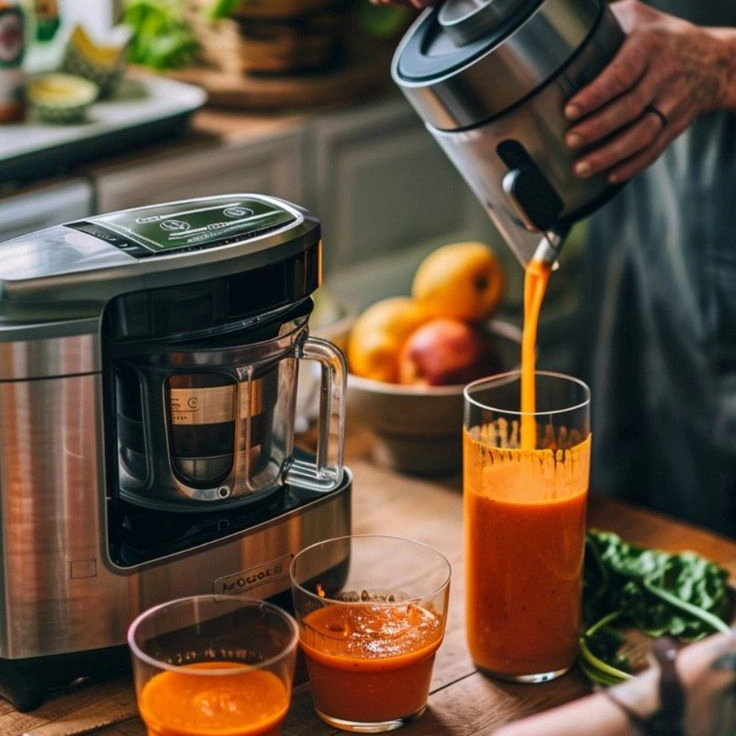
A cold press juicer is a device designed to extract juice from fruit and vegetables by pressing them with a heavy auger, rather than using a fast spinning blade.
It operates on a slow speed, preserving most of the nutrients in the juice. A lot of people choose cold press juicers because they desire a fresh drink with more vitamins.
The next section will demonstrate what to look for when selecting one.
What is a cold press juicer?
A cold press juicer is a juicer that extracts juice from fruits and vegetables through a slow, gentle pressing and grinding process. Fast juicers use spinning blades or motors that whir at high speeds, but cold press models don’t. Instead, they employ a setup designed to retain the most nutrients, enzymes, and flavor in the juice.
This process is referred to as masticating or hydraulic juicing. The ‘cold press’ part refers to the machine operating at low speed and not generating heat, which helps keep the juice fresh and packed with vitamins.
The key factor that separates a cold press juicer from a centrifugal juicer is the method it uses to extract juice. Centrifugal juicers employ blades that spin at 3,000 to 16,000 RPM to shred fruits and vegetables and force it against a mesh filter.
This process is noisy, foamy and can heat up the juice which reduces the nutrients and enzymes. Cold press juicers operate much slower — typically in the range of 80 to 100 RPM. Because it operates at a slow speed, less noise, less foam, and much less air gets into the juice, so you get a smoother drink with a richer taste.
It’s often said that cold-pressed juice appears brighter and stays fresh longer in the fridge than juice from fast juicers.
In order to get the purest juice, it needs to be whole fruits and vegetables. By using the entire piece, the juicer can extract a higher amount of juice and retain more fiber, vitamins and minerals.
For instance, throwing in some leafy greens like spinach or kale or hard roots such as carrots and beets helps highlight the powers of cold pressing. Certain juicers can process nuts for nut milk or wheatgrass, demonstrating their versatility.
The mechanics of cold pressing are uncomplicated yet clever. First, the juicer employs an auger, which resembles a thick screw, to crumble and pulverize the produce into a mushy pulp. This is the masticating moment, as the fruit and veggies pulverize.
Then the pulp goes under a hydraulic press. This press can exert up to 60,000 PSI, pressing every last drop of juice from the pulp. The high pressure aids in keeping bad bacteria away and ensures the juice maintains more of its beneficial enzymes and nutrients.
The entire operation gently presses the juice without generating heat, hence the title “cold pressed.
Even though cold press juicers date back to the 1980s, when Dale E. Wettlaufer created the first industry-standard vertical hydraulic press, today, these machines adorn juice shops and homes globally.
A lot of people consider this the superior juicing method since it produces less waste, retains more nutrients, and juice can be refrigerated for up to three days.
The core benefits of a cold press juicer
Cold press juicers are best known for preserving nutrients, providing enhanced flavor, and operating more quietly than traditional juicers. Their slow, low-heat extraction method not only delivers a higher juice yield but also ensures long-lasting freshness, making them a great juicer option for customers who desire both quality and value.
1. Nutrient preservation
Cold press juicers preserve nutrients in juice because they operate at slow speeds and generate minimal heat. Heat and rapid spinning in traditional juicers damages vitamins and enzymes, resulting in a beverage that has less nutritional worth.
Enzymes such as bromelain from pineapple or vitamin C from oranges break down with heat. Cold pressing can retain these nutrients in juice, delivering a more wholesome punch in every glass.
Leafy greens like kale, spinach, and chard retain their iron, vitamin K, and folate when cold pressed, making this the perfect user for those wanting to maximize their greens.
2. Superior taste
Cold press juicing preserves the authentic flavor of produce. Because there’s less heat and air introduced, the juice tastes fresher and has a smoother texture.
Besides, a lot of users prefer the flavor of cold-pressed juice compared to juice from high-speed spinning machines. The slow masticating action ensures that flavors from apples and carrots or beets come through clean and natural.
For smoothies like apple-ginger or carrot-orange, the flavor remains vibrant and authentic. Others purchase these juicers simply for the improved flavor.
Juice shop customers request cold-pressed beverages for the same reason — they want full flavor. Cold pressing is a great benefit to mixes, such as pineapple-mint or cucumber-celery, which lose their fresh flavor in traditional juicing methods.
3. Higher yield
Cold press juicers are designed to extract maximum juice from fruits and greens. They pull up to 20% more juice from the same produce than fast juicers, reducing your cost per glass.
For frequent home juicers, that translates into less waste and more savings as time goes on. Less pulp left behind means more drink and less to toss, which is better for the wallet and the planet!
4. Less oxidation
Oxidation causes juice to turn color and lose flavor. It can also damage the nutrients within. Designed to work at slower speeds, cold press juicers incorporate less air and produce less foam, which helps the juice retain its freshness longer.
Juice from these cold press machines can stay fresh for three to five days in the refrigerator. Consuming fresh juice with minimal oxidation equals more nutrients for YOU!
5. Quiet operation
Cold press juicers are quieter than other juicers. It’s great for kids’ homes, flats, and small shops.
Reduce noise to make juicing less of a nuisance and allow you to make juice any time without concern. Silent performance suits offices or cafes as well.
Juicer machine comparison

Juicer machines are available in three types, each designed with distinctive features that suit various user preferences. Once you understand the functions, extraction methods and performance of each category, you’ll be in position to make an informed decision and pick out the right machine for your kitchen.
These fundamental distinctions impact not only juice quality, but usability, cleaning, and what produce each machine excels at. Below is a brief overview of the main categories:
-
Masticating juicers (also called slow or cold press) use an auger to crush and press juice from produce at low speed.
-
Centrifugal juicers press juice through fast-spinning blades and centrifugal force.
-
Citrus juicers are specifically designed to press juice from citrus fruits, both manual and electric.
Masticating
Masticating juicers, often referred to as great juicers, slowly crush produce with a screw-like auger, which then squeezes it through a fine mesh. This method produces quality cold press juice with less foam and oxidation, making it ideal for customers who prefer superior taste and texture. The slower speed helps retain more nutrients and enzymes, which is essential for maintaining overall energy levels.
This style of juicer shines when juicing leafy greens, wheatgrass, or harder veggies such as carrots and beets. Unlike centrifugal models, masticating juicers can extract more juice from these hardy ingredients, typically leaving the pulp quite dry. They also reduce the bitter flavors that can result from whirling blades, making them a popular choice among juice companies.
Masticating juicers aren’t only good for greens and roots; most models can handle soft fruits and nuts, with some even making nut butters or sorbets. Price can vary anywhere from $120 up to $600+, but the best cold press juicer model for you will depend on your specific needs and preferences.
Centrifugal
High-speed centrifugal force juice extractors have sharp, flat blades that shred fruit and vegetables and fling the pulp against a spinning sieve. The rapid push allows you to juice tough fruits and vegetables in seconds—perfect for the pressed juicer.
Their biggest advantage is how fast and easy these machines are. They tend to have wide feeding tubes, so you can throw in whole apples or carrots. The high speed translates into more foam and pulp, and sometimes a layered, bitter-tasting, watery juice. They don’t deal with leafy greens as well as masticating types.
Several cheap models taste just as good as expensive, so price isn’t the only thing to look at. They’re great for apples, carrots and other juicy fruits or roots. Some have continuous feed features, allowing you to juice a large quantity without interruption.
Citrus
Citrus juicers concentrate on squeezing the juice from lemons, oranges, limes and grapefruits. The design is basic: you press fruit halves onto a reamer, either by hand or with a motor.
Manual citrus juicers are simple to clean and put together, but require more work. Electric models expedite the process and minimize physical strain, making them more suitable for daily use or big batches. Both can provide higher yields with minimal foam and less propensity for creating bitter flavors from the rind.
Citrus juicers require virtually no prep—simply slice fruit in half. They’re small, light and easy to use, but can only juice citrus fruits.

Size, weight and parts count alter the user-friendliness of machines. Cleaning requirements and assembly time differ a lot, too. Some machines have narrow chutes requiring more prep, others wide. Juice quality and foam levels can vary between models.
Behind the juicer factory
Cold press juicer manufacturing combines expertise, strict safety regulations, and an international quest for improved design. Factories not only produce great juicers but also influence how customers access fresh juice in various locations. The industry is constantly evolving, driven by innovation and enhanced by new benchmarks for cold press juice delivery.

Design process
Designing a new juicer design begins with a rough sketch, then advances to CAD modeling, prototype construction and laboratory testing. Engineers check things like how fast the motor spins, how much juice is made per batch, and the ease of clean up. Teams monitor locked rotor torque and run time limits, ensuring motors can run for 30 minutes before requiring cooling.
That means that for every three kilos of fruit or vegetables, you want at least a litre of juice. User feedback has a huge impact in designing features — handles, pulp bins or sound control. Most companies collect feedback through surveys or social feeds so that recurring irritations are addressed in the next release.
Recent innovations center on compact shapes for tiny kitchens, obvious markings for simple operation, and more pieces that pop apart for washing. Tech tools such as 3D printers and software testing accelerate design adjustments. Smart sensors to track temperature or jammed produce are being built in, making machines safer and smarter.
Professional manufacturer like our ElectMix now include digital screens and app pairing so users can check stats or get care tips.
Material science
Most cold press juicers employ stainless steel, top-quality plastics, or silicone for optimal performance. Stainless steel is hard and rust-resistant, ensuring that juice stays fresh and pure. Additionally, the plastics used must be food-safe and free from BPA and other toxins, capable of withstanding the cold pressing pressure without cracking. Silicone gaskets and seals are crucial, as they stand up to high pressure and prevent juice from leaking, making them essential for both juice companies and home juicing enthusiasts.
A quality cold press machine juicer requires components that won’t shatter or leach over time. Material selections significantly affect juicer performance, with superior steel blades slicing fruits and vegetables smaller, resulting in more juice. Top-notch plastics can withstand heat from dishwashers or rough handling, which is important for both commercial and home users.
Innovations in materials, such as reinforced polymers or biodegradable components, allow manufacturers to produce lighter, more durable units. Some factories are now trialing blends of metals and plastics that either reduce power consumption or increase juicing speed, which is beneficial for those looking for an awesome juicer.
Overall, the materials used in juicer manufacturing play a crucial role in ensuring efficiency and longevity, making it essential for anyone considering a purchase to choose wisely based on their juicing needs and preferences.
Quality control
They test every cold press juicer model in each batch for leaks, blade sharpness, and safe wiring. Others rely on log books to follow tests, as well as certified plans like HACCP to identify issues prior to reaching customers. Every single machine has to pass run time and torque checks, along with testing to ensure it can withstand the pressure that kills microbes 100,000 times over.
Testing and certification isn’t just bureaucracy—most places require robust labels indicating nutrition information, ingredients, and manufacturer. Brands that stay on top of these rules earn trust and keep their brand name strong, especially in the competitive juice industry.
They have random spot checks, motor stress tests, and even juice output measured for each awesome juicer model.
Choosing your ideal machine
Choosing a cold press juicer is all about your lifestyle, goals, and space. It’s not only about specs; it’s about finding the right machine that integrates seamlessly into your life and nurtures your soul. Varied lifestyles—student, busy worker, health guru, or family—require special features. Your selections should be based on how frequently you juice, what kinds of cold juice you desire, and your budget.

Motor power
Motor power is the soul of a juicer’s efficacy. A high-wattage motor (typically 150–250W for most cold press models) can assist with harder produce, such as carrots or beets, providing improved juice extraction and reduced pulp. Lower wattage versions might be quieter and consume less energy, but they can take longer and require smaller fruit or vegetable pieces.
For power-hungry juicers, a powerful motor signifies speedier juicing and superior extraction. Health nuts may want to opt for a slower, lower-powered motor—these units (referred to as slow or masticating juicers) retain more of the vitamins and enzymes.
It is important to check if the machine’s motor matches your daily use: if you juice large quantities or tougher ingredients, opt for higher wattage. For softer fruits or occasional usage, mid-range motors are ok.
Ease of use
Easy buttons and descriptive labels go a long way, particularly for juicing newbies. Single-button or digital displays can help people avoid error or confusion. Tool-free assembly and click-together parts are essential for quick setup and cleanup, which is important if you’re pressed for time.
Dishwasher-safe components minimize hand washing, conserving energy for hectic mornings. Certain models have reverse functions to help clear jams, which comes in handy if you frequently juice fibrous greens. Extra wide feeding chutes enable you to throw in larger fruit chunks, minimizing prep.
Footprint
A juicer’s size can be a deal breaker, particularly in communal or tiny kitchens. Mini models (under 15 cm wide) look great on cluttered counters or shelves, but often come with tinier capacities. If you have a big family or want to juice in bulk, balance is key—pick a model that provides ample capacity without hogging the kitchen counter.
The slim or vertical models conserve space without sacrificing performance. For apartment or dorm dwellers, a small footprint is key. For businesses or large families, favor capacity over space.
Key features to look for
- Strong motor (150–250W) for all produce types
- Wide feeding chute to cut prep time
- Dishwasher-safe removable parts
- Reverse function to clear jams
- BPA-free materials for health safety
- Stable base to prevent slipping
- Quiet operation below 60 dB
- Pulp control settings for different juice textures
Industry expert reviews and peer recommendations on great juicers provide genuine insight into reliability and ease of use, steering customers clear of the usual stumbling blocks.
My personal take on juicing

Juicing, particularly with a cold press juicer, has been a favorite of my own wellness routine. This ancient technique of juice extraction yields more juice and preserves more nutrients from raw fruits and vegetables. I began with cold-press because I simply wanted to inject more vitamins and minerals into my diet with less drama.
It just makes me more likely to get my daily dose of good nutrients in a pinch! The key attraction is how cold-pressed juice remains fresh up to 72 hours, something achievable because it reduces oxidation. That is, the juice retains its flavor, color and most of its nutrients – unlike traditional juicing techniques that employ heat and aeration.
Getting into the habit of juicing required a bit of planning. There’s the prep, juicing, cleanup time–typically around 15 minutes. I discovered that this small effort rewards. One bottle of cold-pressed juice can require 3-5 pounds of produce that’s hard to gobble down whole.
I observed an actual difference in how I felt upon incorporating it into my mornings. There’s something about quaffing cold-pressed juice before breakfast that just sounds like a great way to begin the day when it’s loaded with Vitamin C from citrus or bell peppers. I found energy and concentration to be improved, which I associate with the immediate nutrient hit.
For immune support, a few juices with carrots, oranges or spinach really made a difference – particularly at the height of cold season.
My preferred blends are straightforward and adaptable, influenced by what’s available or ripe for the picking. Some of the best blends I’ve tried are:
- Carrot, apple, and ginger
- Cucumber, spinach, and green apple
- Beetroot, celery, and orange
- Pineapple, mint, and lemon
- Watermelon and lime
These mixes are simple to switch up for flavor, diet or what’s fresh. Cold-pressing allows each to retain its nutrients and bright flavor longer, so I can make juice in advance.
Juicing isn’t a panacea — it’s a convenient way to consume more fruit and veggies, particularly for those who struggle to meet their daily targets. It suits a lot of lifestyles and needs, from helping immune health to simply making it easier to consume a variety of plants.
Anyone can get started with fresh fruits and vegetables and the procedure is simple to master. Juicing is a wise move for any aspiring healthy person.
Conclusion
A cold press juicer operates slow and steady. It retains more vitamins and provides a better flavor in juice. They essentially crush fruit and veggies, then press out the juice with no heat. This preserves bright colors and bold flavors.
The pulp remains dry, so you extract more juice with less waste. For hectic mornings or an energizing sip post-work, this handy tool nestles seamlessly into any kitchen. Clean up takes minimal time and most models have great longevity.
To choose one that fits your requirements, consider size, speed and user-friendliness. With the proper selection, juicing becomes easy and fast, either for personal health or a hustling shop. Keep an eye out for new guides and updates.
Call to Action
Interested in upgrading your juicer setup with ElectMix’s high-performance motors for your commercial juicer? Our team can help you choose the best options for a quality juicer that meets your performance juicing needs.
Frequently Asked Questions
What makes a cold press juicer different from other juicers?
A cold press juicer utilizes slow crushing technology to extract cold juice, preserving more nutrients and enzymes compared to traditional high-speed centrifuge juicers that use heat, which can destroy these vital components.
Are cold press juicers better for nutrient retention?
Ahem, yeah, cold press juicers, like the awesome juicer models, keep more vitamins and enzymes intact. The slow squeezing limits heat and oxidation, maintaining the juice fresher and more nutritious.
Can cold press juicers handle leafy greens and hard vegetables?
Cold press juicers, like the awesome juicer model, handle leafy greens and hard vegetables well, squeezing juice with ease from any produce.
How long does juice from a cold press juicer stay fresh?
Cold press juice can last up to 72 hours in an airtight juice container in the fridge, making it a great juicer option compared to most other juicers.
Are cold press juicers easy to clean?
The majority of cold press juicers, like the awesome juicer models, are easy to clean. With fewer parts and many being dishwasher-safe, they’re perfect for daily use.
Is a cold press juicer worth the investment?
If you prioritize nutrition and fresh flavor, investing in a cold press juicer is worth the cost. Although it’s more expensive initially, it delivers superior cold press juice and health benefits.
Do cold press juicers make less noise?
Yes, cold press juicers are quieter than traditional juicers, making them a great juicer option for juice bars and home-friendly environments.

ElectMix Team provides global e-commerce sellers and distributors with insights on commercial blending solutions, OEM customization, and profitable market opportunities.