Skip to content

Key Takeaways
- Juicers and blenders serve distinct roles in detox programs: Juicers provide quick nutrient absorption ideal for juice cleanses, while blenders offer fiber-rich options that support digestion.
- Cold press juicers are optimal for premium detox positioning: They preserve enzymes and antioxidants with minimal oxidation—perfect for wellness brands selling pre-bottled detox kits.
- Blenders offer flexibility and operational speed: Ideal for gyms, cafés, and fitness centers producing smoothies, protein drinks, or green detox blends on demand.
- Regional preferences influence equipment demand: North America favors both; Europe leans toward cold-press juicers; Asia-Pacific prefers blenders for multifunctional use.
- OEM buyers should align product offerings with detox philosophy: Understand whether clients promote fiber cleansing, juice fasting, or holistic nutrition—then match the right appliance.
- Commercial equipment must prioritize hygiene and materials: Features like BPA-free components, easy-cleaning design, and programmable modes are essential in detox-focused markets.
In the global wellness movement, detox programs have emerged as a multi-billion-dollar industry, spanning nutrition plans, juice cleanses, and fitness regimens. At the heart of many detox routines are nutrient-packed beverages—either blended or juiced. For health-focused OEM brands, wellness chains, and juice bar suppliers, understanding the operational and nutritional trade-offs between juicers and blenders is essential to choosing the right equipment for commercial detox programs.
This article explores the differences between juicers and blenders through the lens of detox effectiveness, operational efficiency, and commercial application. It also provides guidance for equipment manufacturers and B2B buyers seeking the best fit for their target markets.
Juicer vs Blender: What’s the Fundamental Difference?

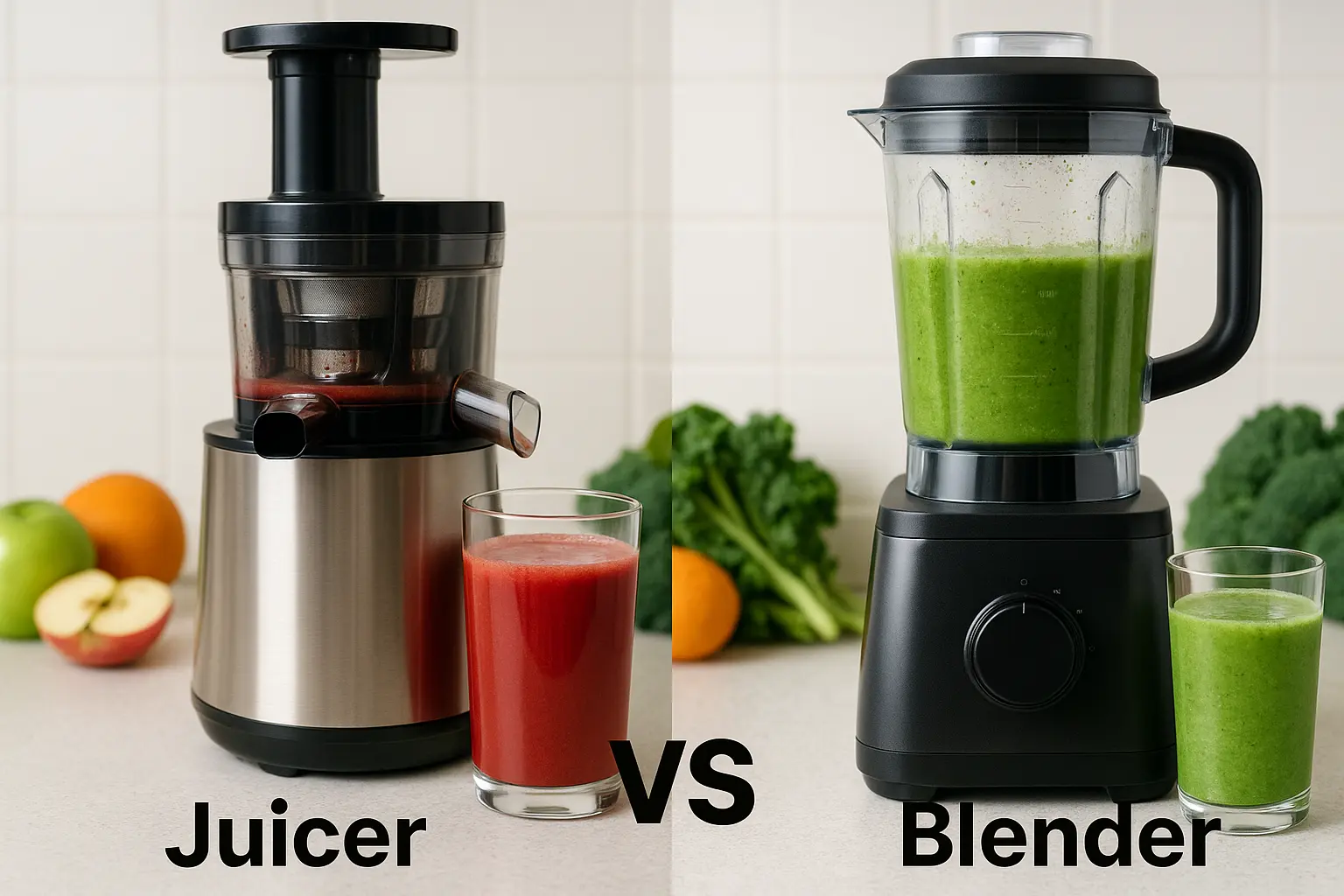
Although both juicers and blenders assist in increasing your daily consumption of fruits and vegetables, they employ different techniques and provide distinct outcomes. The one you choose depends on your requirements for flavor, texture and nutritional content.
What Is a Juicer?
A juicer extracts juice from the fruit or vegetable and separates the pulp, leaving the drink with very little fiber. This provides you with pure liquid that is easy to absorb. Juicing is quick and provides a method for a concentrated hit of vitamins and minerals.
A lot of folks use juicers for detoxes and the like because the juice is easy to drink and can be absorbed by the body quickly. Since the pulp is extracted you lose the majority of the fiber in the produce — which is essential for digestion and gradual energy release. Juices from a juicer typically taste lighter and less thick than smoothies.
Certain fruits, such as apples, oranges and carrots, are best suited for juicers – they are easy to juice, release a lot of liquid and have strong flavors that translate well into juice.
Types of juicers:
Centrifugal juicers use an extremely fast-spinning blade to shred fruits and vegetables, forcing the juice through a mesh filter. They excel with hard produce like apples and carrots but tend to be loud and inefficient with greens.
Cold press / masticating juicers, which are sometimes referred to as slow or cold-press juicers, crush the produce to extract juice at a slower rate. They’re quieter and fare better with leafy greens, but are more time-consuming to use. Juicers made specifically for citrus fruits squeeze juice with very little effort.
Which juicer you choose comes down to what type of produce you want to juice and how much time you’re willing to invest.
What Is a Blender?
A blender chops and mixes all of the fruit or vegetable’s bits — including the skin and pulp — into a thick drinkable mixture. The outcome is a smoothie, which retains the fiber and slows sugar absorption. This can keep you satiated longer and is healthier for blood sugar management.
Blended drinks have a creamier texture and thicker mouthfeel than juiced drinks. Blenders can process almost any produce including soft fruits like banana and avocado that produce little juice. You can even throw in some extras like seeds, nuts or protein powder to create a more full meal.
Blending is a great method for achieving a balanced consumption of nutrients and fiber, particularly for individuals seeking a satiating snack or breakfast.
Types of blender
Regular blenders are typical for home kitchens as they work with the majority of fruits and soft vegetables. High-performance blenders, with more powerful motors, can pulverize ice and blend hard fruits and veggies like carrots or beets.
- High-speed blenders: Ideal for creating green smoothies and protein-based detox drinks.
- Immersion blenders: Useful for small-batch preparation or soups.
Nutritional Effectiveness in Detox Programs

Detox programs that utilize juicers and blenders are a popular go-to for those looking for a quick fix to reset their eating habits or health. Although both techniques are comparable in their objective to increase the consumption of fruits and vegetables, they differ greatly in what nutrients they preserve or eliminate, as well as their impact on the body.
Juicer detoxes are where you drink only the juice from fruits and vegetables, leaving behind the pulp. This leaves you with a clear vitamin- and some mineral-rich liquid, but removes fiber. Fiber isn’t just roughage — it aids in normal bowel movements, keeps blood sugar levels steady and makes you feel full after eating. Don’t forget fiber — your body can’t reap its health benefits without it.
Here is comparing:
| Aspect | Juicer | Blender |
| Nutrient Density | High (especially with cold-press technology) | Moderate (diluted by fiber and water content) |
| Fiber Content | Low (mostly removed) | High (entire produce is blended) |
| Absorption Speed | Fast—quick delivery of vitamins and antioxidants | Slower due to digestion of fiber |
| Enzyme Preservation | Better (cold press models) | May degrade with high heat/friction |
Conclusion: Juicers provide quicker detox effects due to rapid absorption, whereas blenders support digestive health with fiber-rich drinks.
Commercial & Operational Considerations

That’s because deciding whether to opt for juicers or blenders is about more than just flavor or nutritional value. For commercial environments, that choice defines workflow, operational costs, and menus. Each has pros and cons, particularly for detox programs or high-volume food and beverage operations.
Juicers in Detox Programs
Juicers suck juice from fruits and vegetables, casting aside pulp. This yields silky, pulp-light beverages, commonly favored for rapid absorption on cleanse routines.
Pros:
- Suitable for juice cleanse packages
- Long shelf-life (especially cold-pressed juices)
- Low oxidation with slow-speed models
Cons:
- More waste (pulp byproduct)
- Slower output in commercial use (vs blenders)
- Requires more cleaning and maintenance
Blenders in Detox Programs
Blenders pulverize the entire fruit or veggie, making thicker, more fibrous drinks. This makes them ideal for smoothies and whole-food-based detox programs.
Pros:
- Higher yield (no pulp waste)
- Faster preparation for made-to-order detox drinks
- Versatile—can process frozen fruits, seeds, superfoods
Cons:
- Heavier texture may not appeal to all detox users
- Lower nutrient concentration per serving
OEM Insights: Choosing the Right Equipment for Your Market
For OEM brands targeting detox-focused businesses, choosing between juicers and blenders hinges on two factors:
1. Detox Philosophy
- Juice Cleanse Brands (e.g., cold-pressed detox kits): → Should prioritize cold press juicers with high yield and nutrient preservation.
- Functional Nutrition Programs (e.g., gyms, spas, cafes): → Should opt for high-speed blenders with programmable settings for smoothies, shakes, and soups.
2. Market Preferences by Region

Market appetite for equipment isn’t consistent globally. High-speed blenders rule at smoothie bars and fitness cafes across North America, where consumers are obsessed with blended veg and fruit concoctions.
Most OEM chains in the US and Canada opt for blenders that can process frozen fruit, greens and seeds, even crush ice, so are versatile for recipes. In Europe, cold-press juicers are more prevalent in higher-end juice bars and retail lines that revolve around organic, detox themes.
These juicers extract pure juice, which is in-line with European tastes for clear, pulp-free beverages. In the Middle East and Asia, blenders and juicers are strong in hospitality, but blenders tend to be coupled with grinders for greater versatility, enabling the business to serve juices as well as thicker blends.
| Region | Equipment Preference | Reason |
| North America | Blenders & Juicers (split) | Wide consumer base; both fiber-rich and juice options |
| Europe | Cold Press Juicers | Strong demand for low-oxidation, organic detox juices |
| Asia-Pacific | Blenders | Smoothies with herbs, roots, and grains are popular |
| Middle East | Juicers | Preference for light, pulp-free detox drinks |
Regional tastes determine what OEMs have to provide and customize for each market. Customization is par for the course with OEM. Motor specs and plugs are typically modified for local standards, allowing operators to set up equipment in any country with no compatibility concerns.
This flexibility is critical to global brands or those exporting to different markets.
Use Cases: Equipment Fit by Business Type

Juicer vs. Blender for detox menus – it all depends on what your business needs and what’s on the menu. Every one of these machines serves a function in food service, and their equipment fit by business type really depends on volume, type of use, and space. Knowing the primary work each addresses helps companies choose the best one for their process.
Restaurants, for example, often require multiple juicers or a larger machine. If the menu is heavy on fresh juice options, centrifugal juicers are ideal, as they’re quick and can process a nice blend of fruits and vegetables. These juicers utilize a timed spinning metal blade that literally chops up produce and centrifugally forces out the juice. This one’s best for joints that slug juice in volume and like to get those drinks out quick.
For locations where juice quality trumps all, such as juice bars or health cafes, masticating juicers are the norm. These machines pulverize and squeeze fruits and vegetables, extracting out more liquid and less foam. Some models feature screens that allow you to adjust the pulp level, which comes in handy when your customers want a voice in their drink’s texture.
Blenders are kitchen workhorses that extend way beyond beverages in most professional kitchens. They’ll crush ice, smoothies, soup or even pie fillings. Commercial blenders? High-powered hotel or large kitchen blenders can shatter through hard foods like nuts and seeds. This is critical for nut butters or pureeing hot soups.
With power motors and razor-sharp blades, these blenders help kitchens operate more efficiently and serve more varieties. In extremely high menu volatility locations or blended drink locations, a powerful blender is a necessity.
Both juicers and blenders can make plant foods ‘healthier’ by pulverizing them to small pieces. This increases the bioavailability of phytochemicals, allowing the nutrients to be easier for the body to utilize. It really just depends on what you need most, juice or blended foods, and how much you’re making per day.
Big hotels and commercial kitchens with a wide menu frequently utilize both. Smaller cafés may get started with only one, depending on their core menu.
Here is sum-up for your reference:
| Business Type | Recommended Equipment | Justification |
| Juice Bars | Cold Press Juicer | High-nutrient, fresh juice batches |
| Wellness Spas | Juicer + Blender | Flexibility for tailored detox packages |
| Fitness Centers | High-Speed Blender | Protein smoothies and post-workout detox drinks |
| Meal Plan Services | Juicer | Easy-to-digest drinks for meal replacement clients |
| Vegan Cafés | Blender | Fiber-rich smoothies and superfood detox bowls |
Product Development Tips for OEM Brands
So, OEM brands that want to build a strong product line in the health and wellness space need to examine the key variation between industrial juicers and blenders. They’re each useful. Juicers extract juice from fruits and vegetables, discarding the pulp. This translates into users obtaining transparent juice.
Points as below you should know:
- Offer multi-function equipment: A combination of blending and juicing functions expands market reach.
- Emphasize ease of cleaning: Many detox programs require frequent use—quick cleanup is essential.
- Highlight BPA-free, food-grade materials: Especially important for health-conscious detox consumers.
- Include recipe programming: Help B2B customers deliver consistent detox results to end-users.
Conclusion
Conclusion: Which Is Better for Detox?
No one-size-fits-all answer. Blenders and juicers both play critical roles in detox programs, but:
- For rapid nutrient absorption and premium detox branding → Cold Press Juicer
- For fiber-rich, filling beverages and versatility → High-Speed Blender
OEM brands should tailor their offerings to their buyers’ detox philosophy, operational needs, and regional market demand.
Frequently Asked Questions
1. Which is better for weight loss: a juicer or a blender?
A juicer offers quick absorption and fewer calories per serving, while a blender provides satiety due to fiber. The best option depends on your weight loss strategy.
2. Are detox drinks from blenders less effective?
Not necessarily. They are slower to digest but provide digestive support and help regulate blood sugar through fiber.
3. Can one appliance do both blending and juicing?
Yes, some hybrid models exist, but they often sacrifice efficiency in either function. OEMs can consider offering modular attachments instead.
ElectMix Team provides global e-commerce sellers and distributors with insights on commercial blending solutions, OEM customization, and profitable market opportunities.