 Skip to content

- Key Takeaways
- Juicer Market Saturation
- The Core Appliance Distinction
- Shifting Consumer Demands
- Unlocking Blender Niche Opportunities
- Future-Proofing Your Appliance Strategy
- Beyond the Machine
- How ElectMix Supports New Blender Product Categories
- Conclusion
- Frequently Asked Questions
- Is the juicer market saturated?
- What’s the core difference between a juicer and a blender?
- How are consumer demands shifting in this category?
- Where are the best niche opportunities for blenders?
- How can brands future-proof their appliance strategy?
- What matters beyond the machine itself?
- How does ElectMix support new blender product categories?
Key Takeaways
- Juicer growth saturates at the juicer market. Blenders continue to gain momentum due to wider use cases. Anticipate juicer consumer fatigue and more robust niche growth for versatile blenders.
- What truly counts is the fundamental difference for product marketing and messaging. Blenders win on fiber retention, texture control, ingredient versatility, lower waste, and smaller operational footprint.
- Consumer’s desire for wellness, convenience, and sustainability. Featuring fiber-forward recipes and faster prep routines, our energy-efficient options include recyclable packaging and durable parts.
- Blender categories can expand from smoothies into functional beverages and culinary processing. Create product and content for sauces, soups, plant milks, and nutrient-forward beverages.
- Future-proofing centers on modular designs, smart capabilities, and energy efficiency. Focus on upgradable parts, app-connected coaching, and low-watt high-torque power.
- The success goes beyond hardware, with supply chain, menu development and brand storytelling. Develop trusted supply chains, develop adaptable recipe databases, and market obvious health and sustainability advantages.
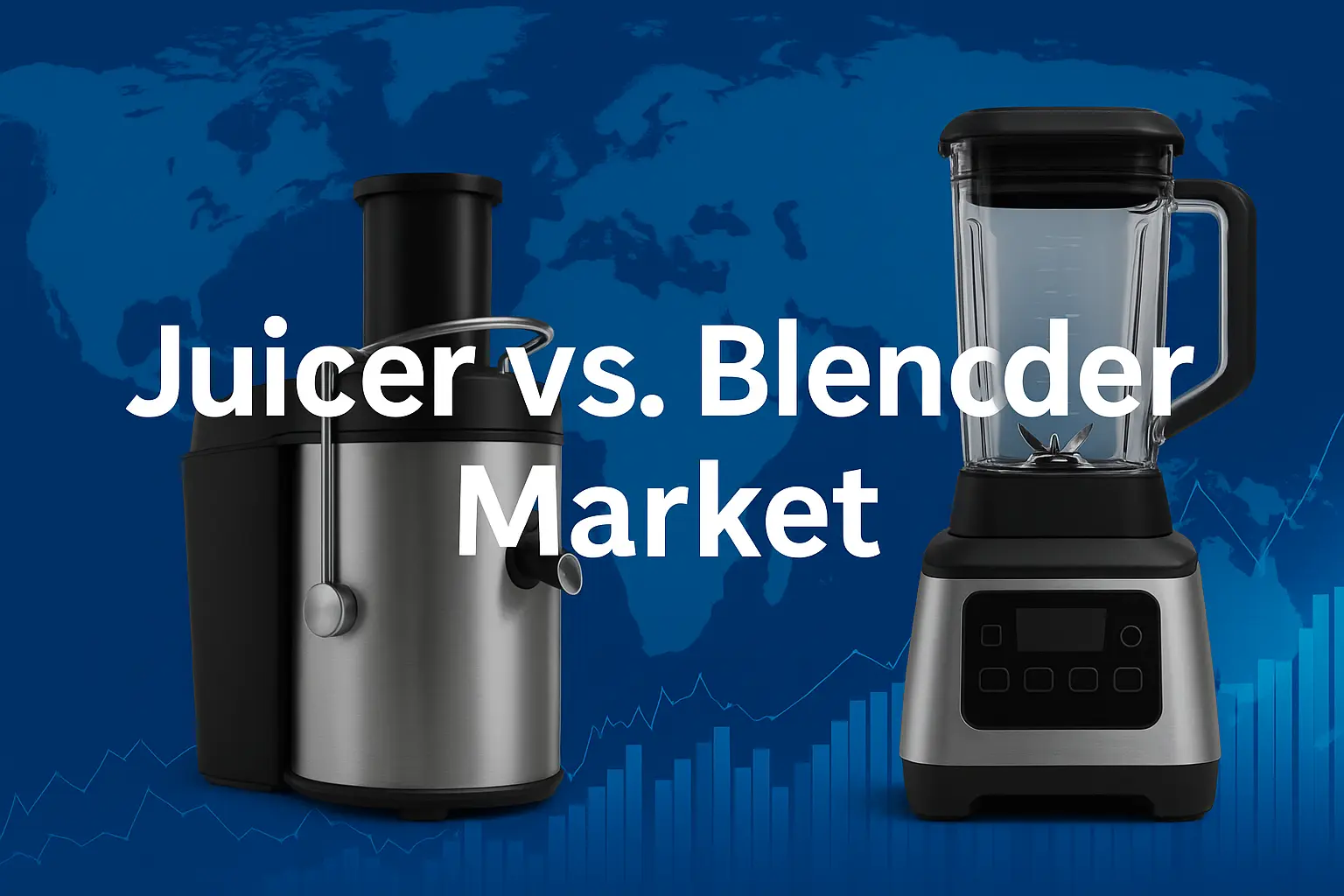
Juicer vs blender market, global demand, sales and market trends for home and commercial juice extractors and blending machines. Buyers consider yield, texture, nutrition, and cost.

Juicers remove the pulp for transparent juice, whereas blenders retain the fiber for denser drinks. Power ranges from 500 to 1500 watts, noise levels, volume ranges from 0.5 to 2 liters, and maintenance is considered.
Big names top with smart features and multi-speed modes. Below, they map share, growth, and user needs.
Juicer Market Saturation
Growth has been solid as an increasing number of consumers look for convenient, at-home nutrition through juicing and blending. The juicer machine market has expanded quickly, but so has bewilderment as consumers compare centrifugal juicers and standard blenders, while brands battle for shelf space.
Consumer Fatigue
Too many shoppers encounter near-identical versions. Dozens of vertical slow juicers flank tiny centrifugal units, all with slight variations in wattage, chute size, or cleaning instruments. This causes choice overload and extended decisions. They fall back on mid-price picks or postpone purchase altogether.
Noise and energy draw contribute friction. Users say early-morning prep is too loud in small apartments, so brands sell ‘quiet’ motors and better insulation. Energy consumption and material waste are important. There will be increasing demand for parts made from recycled plastics or biodegradable composites, and motors rated for lower kWh per litre of juice. Others make a great show of publishing energy-per-serve numbers to engender trust.
Seasonality hammers focus. Search interest for ‘juicer machine’ spikes with health goals, peaking at 100 in January 2025. Promotions cluster in the same weeks, which drives fatigue and price-driven churn more than loyalty.

Niche Dominance
A few niches hold real power: cold-press juicers for higher yield and juice shelf life, compact juicers for small kitchens, and easy-rinse designs with fewer parts. Cold-press juicers dominate in Western Europe, where eco-friendly kitchen appliances have a share, showing a preference for quieter, lower-waste appliances. The juicer machine market is evolving to meet these demands.
About pockets of growth differ by region. The Asia–Pacific market is gaining real momentum as incomes increase, urbanization continues, and the nutrition message is disseminated. Multi-voltage models, clear service networks, and local-language guides allow brands to scale faster there, particularly in the personal blender segment.
Multipurpose devices are a juggernaut. Four-in-one units that blend, juice, grind, and process cut down on counter clutter and cost per use. For a family that makes blended smoothies, nut butters, and carrot juice, one base that swaps attachments frequently trumps a single-purpose juicer.

Innovation Plateau
At the heart, juicing hasn’t evolved significantly. Margins now depend on quieter gear, easier cleaning, and smarter controls, not giant jumps in yield. Many launches are cosmetic: new colors, minor auger tweaks, or app timers.
That being said, a couple of upgrades do count. Pulp-ejection paths resist clogging. Self-clean pulses reduce rinse time to less than 2 minutes. Motors are tuned for lower rpm with stable torque to press leafy greens. Small improvements are practical for daily use.
Sustainability is the next moat regarding juicer market saturation. Durable parts, repair kits, and transparent material sourcing can redefine value in a crowded space.
The Core Appliance Distinction
Blenders and juicers address different tasks, with blenders pulverizing whole fruits and vegetables into a smooth consistency for blended smoothies, sauces, and soups. In contrast, centrifugal juicers extract fresh juice from fruits and vegetables while discarding the pulp, highlighting the juicer difference in fiber and yield.
1. Fiber Retention
Blenders churn up the entire ingredient, so fiber remains in your beverage. You get both soluble and insoluble fiber, which can aid in satiety and sustained energy. Your spinach and banana smoothie marries leaves, stems, and seeds into one mix.
Juicers separate pulp from liquid, so the majority of insoluble fiber exits with the dry pulp. You still receive vitamins, minerals, and phytochemicals in a transparent juice. A carrot-apple juice tastes sunny and airy, but it won’t provide the same fiber punch of a blended carrot smoothie.
2. Texture Control

A blender could personalize mouthfeel through variable speed and pulse. You can grind thick for smoothie bowls or thin for a tomato soup. Throw in some ice or frozen berries for heft.
Blend longer for a silkier sauce or shorter to maintain some bite. High speed models can emulsify dressings and grind nuts into butters, expanding control from frothy to creamy.
3. Ingredient Versatility
Blenders handle a wide range of ingredients, including raw vegetables, nuts, seeds, grains, hot liquids (with care), frozen fruit, and ice. Think of pesto, tahini, hummus, pancake batter, and curry puree. One jar fuels a lot of work from breakfast to dinner.
That’s the core appliance difference. Juicers focus on produce. Centrifugal models handle hard stuff, like apples, carrots, and beets with fast runs. Slow masticating units pulverize leafy greens, wheatgrass, and soft fruit with superior extraction.
Others have additional screens for sorbet from frozen fruit, but that’s a side function, not the primary objective.
4. Yield and Waste
Juicers can extract maximum liquid, particularly from hard fruits and vegetables. As a trade-off, there is pulp waste, which you could recycle in veggie patties or broths. They consider the dense micronutrient hit per 250 milliliter serving.
Blenders have no pulp discard, so food waste is minimal. The beverage could be thicker or more in volume, which might affect the rate of consumption and satiety.
Prices vary. Juicers tend to be more expensive initially and require more maintenance to keep screens and augers clear.
5. Operational Footprint
Blenders tend to be quicker to clean. It is just a jar, a lid, and a blade.
Juicers have more parts: chute, auger or basket, screen, pulp bin, and spout. Setup and cleanup take longer and fine screens need brushing. Noise, size, and counter space differ by version, with high-speed blenders typically noisier than slow juicers.
Shifting Consumer Demands
Demand in the juicer machine market versus the blender category mirrors bigger lifestyle changes. Health, time, and environmental impact now influence how individuals select and utilize centrifugal juicers and blending techniques across geographies and incomes.
The Wellness Wave
Health cognizance is up, and consumers demand kitchen appliances that assist them in the preparation of nutrient-rich beverages and dishes at home! Cold-press juicers target users obsessed with greater juice yield and less heat, preserving vitamins in leafy greens, carrots, and beets while enhancing the appeal of homemade juices.
High-powered blenders, including personal blenders, process thick shakes, nut butters, and soups, providing whole-fruit protein and fiber blends in a single batch. This shift covers both developed and developing markets in the juicer machine market.
In Asia-Pacific and Latin America, increased disposable income and swift urbanization have brought contemporary kitchenware to more countertops. One appliance that can purée baby food, crush ice for fruit blends, and prep sauces makes mealtime feel more manageable and supports the rise of smoothie shops.
Consumers look for easy-to-add nutrition boosters, such as individual cups for post-workout shakes or grinder jars for seeds and spices. Fitness and diet crazes intensify the pressure to create healthy drinks.
Consumers are looking to control sugar and add greens, and they seek portion control. Demand grows for preset programs that level greens without overpuréeing, tamper tools for dense blends, and blades that crush frozen fruit with no stalling.

Convenience Culture
Time pressure rewards products that wash quick, rinse quick, and fold little. Rechargeable blenders triumph on commute-friendly usage, gym bags, and tiny flats. A 300 to 500 ml cup with a safety lid, USB-C charging, and one-touch blending means breakfast on the go. For smoothie lovers, these compact juicers can also whip up fresh juices in a flash.
Wide-mouthed jars and dishwasher-safe components slash cleanup to minutes. Smart features are making the jump from premium to mid-range. App prompts lead different recipes, auto-stop save motors, and IoT-enabled units monitor cup counts or recommend maintenance. This is particularly useful for those who enjoy making homemade juices and blended smoothies.
For a lot of people, it’s not new stuff that attracts them; it’s less stuff. One-touch presets, self-clean pulses, and clear max-fill lines prevent mess and guesswork. Multifunction design is now a baseline demand, especially in the competitive juicer machine market.
Combo models that blend, juice, and food-process with swap-in jars eliminate clutter. One base that whips up salsas, oat milk, and celery juice saves room and cost and hits more diets under one roof. The versatility of these juicing appliances makes them essential in modern kitchens.
Sustainability Concerns

Consumers are increasingly seeking durable kitchen appliances with less disposable components, focusing not only on eco-claims but also on the functionality of their juicing appliances. BPA-free plastics, glass jars, and recyclable metals are essential, but long-life motors and replaceable seals are crucial for longevity. Transparent spare-part routes ensure that home juicers remain operational for years.
Factors like recycled packaging and low-watt standby modes are shaping consumer preferences, especially in the juicer machine market. Price remains a significant consideration, particularly in the Asia-Pacific region, where there is a demand for affordable, durable blenders to assist with everyday cooking and juicing.
Brands that combine repairable design, easy-to-find parts, and energy-smart motors are the ones winning repeat sales in the competitive market of personal blenders and commercial juicers.
Unlocking Blender Niche Opportunities
Blenders bridge the gap between juicers and food processors, spanning activities that straddle drinks, wellness, and cooking. The range is wide, with personal blenders and countertop blenders featuring variable speeds and tamper tools, shaping both texture and workflow in homes and commercial kitchens.
Beyond the Smoothie
Blenders do more than just create fruit shakes; they excel in making fresh juices and green smoothies. Most machines handle juice extraction by blitzing leafy greens with water and then straining for a thinner drink. A number of brands provide guides and recipes to fine-tune ratios for different recipes, ensuring a flavorful end product.
With pulse and variable speeds, you can transition from rough salsa chops to baby-friendly ultra-smooth purées. This control is essential for achieving specific textures without over-processing ingredients, especially when using a centrifugal juicer.
Thermal control jars and high-speed friction can warm soups to serving temperature, which is handy for micro kitchens with limited stovetop real estate. They also accelerate prep in cafés where hot items require a quick turnaround, making them ideal for the juicer machine market.
The trade-off is that blade heat and air incorporation can destroy some enzymes and oxidize nutrients, so cold blends and lower speeds suit heat-sensitive produce. Systems vary.
Centrifugal juicers that use extremely high RPMs are fast for fibrous produce, while cold-press juicers use auger-like motion for denser results and less foam. Select the build for end use, not hype, to ensure you get the best out of your juicing experience.
Functional Beverages
Blenders support higher daily fruit and vegetable intake by making formats people actually drink: green juices, fiber-rich smoothies, and nut-and-seed milks. Adding spinach, cucumber, and citrus can give you an extra shot of vitamins A, C, and K, plus minerals like potassium and magnesium.
For sport or recovery, blend protein with oats and berries for slow-burning carbs or make electrolyte blends with melon, salt, and lime. Commercial operators can standardize recipes with pre-set programs, speeding service and increasing consistency.
Tamper tools eliminate air pockets in dense blends such as açaí bowls, reducing re-blends and waste. Mind oxidation. Use chilled ingredients, pulse on low speeds when you can, and serve immediately.
If storing, fill jars to the brim, cap tightly, and store at 4 °C to minimize nutrient degradation.

Culinary Applications
Blenders envelop sauces, soups, batters, and pastes in minutes. Think velvety tomato soup, tahini dressings, pesto, hummus, pancake batter, and curry pastes. Variable speed helps stage emulsions.
Start low to unite oil and water, then ramp up for sheen. Pulse to add texture to salsa or romesco. In professional kitchens, the precise motor and jar shape optimize throughput.
Batch-cook purées and then finish to order. Thermal jars save a step by heating and blending in one jar. Choose the unit by job: high-RPM for fine purées, cold-press style for thick spreads, and smaller cups for single-serve mise.
Add-ons such as tampers and scraper lids reduce your efforts and guarantee consistent processing.
Future-Proofing Your Appliance Strategy
Design a configuration for your juicing appliance that evolves with your shifting menus and nutrition targets while remaining reasonable in terms of long-term expense and space.

Modular Systems
Modular systems de-risk your strategy by allowing you to grow as needs increase. Begin with a base blender or juicer, then add jars, larger pitchers, or a citrus juicer attachment as your menu evolves. This comes in handy as you progress from smoothies to sauces or from green juices to citrus-forward blends.
It avoids day-one fees for features you don’t use. Match modules to crops. Cold-press juicer modules manage leafy greens, wheatgrass, and soft fruits, pressing slowly to minimize heat and oxidation. Centrifugal modules are speedier and good for harder fruits such as apples or carrots, but they can add more air.
For blended goods, employ variable speed jars to manage texture for fibrous goods such as pineapple or kale. Certain systems provide over ten speeds, which helps to fine-tune grit-free soups, nut milks, and seed-heavy blends.
Volume scale is also important. If you’re budgeting 1 to 2 liters per service, a larger jar or an additional holding tank can reduce batch time. If you require several formats—juice shots, smoothie bowls, and hot soups—having both a juicer module and high-capacity blender base might be more realistic than forcing one device to do it all.
Smart Technology
Smart controls bring real value when they solve repeatability in the juicer machine market. With preset cycles for fibrous greens, frozen fruit, or nut pastes, they ensure consistency across staff, which matters for multi-site teams. App-linked tracking can record cycle counts and maintenance reminders, minimizing downtime for blade or seal changes and guesswork in juice extraction.
Temperature-monitoring sensors help preserve nutrients in homemade juices. Heat and friction can oxidize vitamins and may destroy enzymes in delicate produce. A smart blender that displays real-time heat rise enables you to reduce speeds or pause and utilize heating functions when desired, such as crafting a fresh juice in less than five minutes.
Firmware updates that introduce new cycles extend life without new hardware. Connectivity has to be useful, not flashy. If the app can’t adjust speeds, log different recipes, or push safety checks, it’s noise. Prefer open accessories, such as additional cups, grinding bowls, and citrus heads, that amplify actual work.
Energy Efficiency
Energy ratings count, but style counts more when choosing a juicing appliance. A cold-press juicer extracts at low wattage and low heat, preserving nutrients in spinach, herbs, and berries. Meanwhile, a high-powered blender, such as a fast juicer, pulverizes nuts, frozen fruit, and hard vegetables. Variable speed prevents over-processing and reduces waste by achieving the ideal consistency quicker.
Plan by menus. For citrus bars, a modular citrus attachment on one motor conserves space and energy. For mixed programs like green juice, smoothies, and soups, having a cold-press unit and a variable speed blender could consume less total energy than using a single appliance longer at high speeds, particularly when considering the juicer machine market.
Nutrition goals continue to take priority. Juiced or blended, they aid your fruit and vegetable intake with important vitamins and minerals. Opt for low-heat extraction for enzyme-sensitive foods. Turn to higher speeds only when texture insists.
Beyond the Machine
Market growth, product design, and daily use shape choices more than specs alone. The juicer machine market was USD 2,381.3 million in 2024 and is expected to grow at a 3.4% CAGR from 2024 to 2033. This reflects a sustained appetite from home users, cafés, and wellness brands that depend on dependable supply, consistent menus, and transparent narratives that deliver expectations in juicing.
Supply Chain
Procurement begins with motors, blades, seals, and jars. Motors require steady torque and heat management, as blade friction can heat up blends and jeopardize enzymes or nutrient oxidation. Vendors that qualify bearings and windings to tight tolerances cut failure rates and returns.
Juicer internals broken out by type. Centrifugal systems employ rotors and stainless screens, high velocity blades and mesh filters. They require balanced rotors, fine screens and steady stainless supply. Masticating juicers rely on hardened augers and gearboxes, which require alloy quality and precise molds.
Packaging and logistics are important. Lightweight, shock‑resistant cartons cut breakage while regional parts hubs minimize downtime for cafés that brew at dawn. With global buyers, dual‑voltage SKUs and EU/UK/US plug kits reduce inventory risk.
OEM partners like ElectMix help with shared component pools, variable speed modules with over ten speeds, not just two to three, and thermal control jars that heat soup in under five minutes yet stay cool outside. These common components generate scale, stabilize lead times, and ease aftermarket support.
Menu Development
Menus live or die on repeatability. For smoothie bars, variable speed control allows employees to move from pulsing frozen mango to smoothing fibrous greens without over-shearing. It lessens oxidation and keeps color holding on a 300 ml take-away.
Juice programs select either centrifugal for high throughput or masticating for increased yield and quiet bars. A morning rush might prefer centrifugal for apple-carrot in 30 seconds. A wellness corner might opt for masticating for leafy greens where yield and mouthfeel are important.
Daily routines fuel volume as well. So many of us take a green smoothie each morning because it’s a simple way to sip some fresh produce. For cafés, a thermal jar expands menus. Blend and heat tomato-basil soup at lunch, then switch to iced fruit blends by mid-afternoon.
Pilot recipes by SKU. Log speed increments, operating time, yield in grams, and scrap. Standardize cups in milliliters, just so it’s not too expensive anywhere.
Brand Storytelling
Consumers want clarity on trade-offs. Blenders are versatile, but blade heat can impact enzymes. Juicers separate fiber for a different texture and shelf life.
Tie assertions to simple measurements, such as efficiency percentage, decibel level, and average sips per minute. Share care tips that matter anywhere: pre-chill jars for smoothies, rinse filters between batches, and store cut fruit at 4 to 5 degrees Celsius to limit oxidation.
Describe tiny, specific tales, such as a café reducing morning wait by 2 minutes with a variable speed assembly line or a dinner chef creating steaming hot pumpkin bisque in less than 5 minutes, so purchasers visualize how the instrument suits actual routines.
How ElectMix Supports New Blender Product Categories

ElectMix helps brands move fast from idea to shelf. The goal is simple: build centrifugal juicers and blenders that match real use, serve clear jobs, and open new market space across the juicing appliance versus blender landscape.
OEM and private label paths that speed market entry
ElectMix provides OEM builds so a company can introduce a blender series under its own label. That means control over specs, motor size, jar volume, blade sets, and safety features, with ElectMix taking care of sourcing and build.
Private labeling adds immediate-to-market SKUs with custom badges, colors, and packaging. Both routes assist in carving out new product categories, such as a compact prep blender for tiny kitchens, a silent bar version for cafés, or an infant food blend series that focuses on delicate textures and hassle-free cleaning.
Brands get quicker test cycles, which reduces risk and aids in uncovering fit in new markets.
Design and function choices that map to real use cases
ElectMix supports custom design for jars, lids, and housings, as well as functionality changes such as pulse logic, preset cycles, and variable speed control. Variable speed is crucial to this texture control because it allows a brand to provide distinct tiers, from soft blend for salsa to high shear for nut butter.
High-speed choices open up frozen fruit, nut, and ice drinks, which become new menu offerings and product labels, like ‘frozen dessert blender’ or ‘nut milk maker’. Think 1.5 L jar for home users with 600–800 W, 2.0 L tritan jar for cafés with 1,500+ W, or vented lid for hot blends. Each is built to a price point in EUR or USD as needed.
Product development and foodservice insight that reduces guesswork
ElectMix’s product development team injects test data on motor loads, noise, jar flow, and blade wear. That helps brands specify ceilings and cost floors with fewer iterations.
A history of foodservice deals gives real workflow insight: café back bars need low noise and fast clean, hotel buffets need batch size and stable duty cycles, and smoothie stands need simple presets for staff turnover. These lessons guide defined categories such as ‘silent counter units’, ‘batch blenders’, and ‘preset smoothie stations’.
Commercial focus that scales from pilots to chains
ElectMix constructs commercial-grade units that manage extended duty cycles and worldwide voltages. This is beneficial for smoothie and juice bars that want to grow.
Brands can test a small number of SKUs, collect feedback on beverage yield per 250 ml serving, adjust settings, and then launch. Support covers spares, training guides, and QC, so units stay live and costs remain on target as volumes climb.
Conclusion
The juicer space seems crowded. The blender space continues to have growth potential. Clear delineations assist in this regard. Juicers extract juice. Blenders create complete beverages and dishes. Taste trends indicate fiber, greens, nut milk, and fast prep. Employ that tilt.
To identify success, experiment on a limited basis. Monitor repeat purchases, basket size and return rate. Keep the pitch clear: smooth bowls, hot soups, seed mills, baby food. Demonstrate by time and yield. For example, 500 ml green smoothie in 60 seconds or 2-minute oat milk with 30g oats.
To keep sharp, couple data with field checks. Speak to users. Check user feedback. Need assistance vetting a new blender line or niche add-on? Contact ElectMix to engage the next step.
Frequently Asked Questions
Is the juicer market saturated?
Yes, in much of the world, the category of juicer machines, including centrifugal juicers, is mature and slow-growing. Shelf space is congested, price competition is intense, and the point of differentiation is small. Brands are finding more lucrative returns by focusing on high-value niches or branching into multi-function blending techniques.
What’s the core difference between a juicer and a blender?
Centrifugal juicers extract juice while bypassing pulp, effectively removing most of the fiber. In contrast, standard blenders process the entire ingredient, retaining fiber and texture. Opt for a juicing appliance when you desire clear juices, and choose blenders for smoothies, soups, and sauces, as they offer broader use cases for daily prep.
How are consumer demands shifting in this category?
Buyers desire multi-function, healthy, and time-saving devices such as centrifugal juicers and personal blenders. They prefer machines that take care of smoothies, nut butters, frozen desserts, and hot blends, while sustainability and repairability are becoming increasingly important in the juicer machine market.
Where are the best niche opportunities for blenders?
High-performance single-serve, portable battery-powered nutrient extraction is a niche like nut milks or baby food, especially for smoothie lovers. Silent blenders for communal spaces and mini versions for miniature kitchens, including compact juicers, are also available. Distinct use cases and accessories increase adoption and retention.
How can brands future-proof their appliance strategy?
Bet on modular designs for juicing appliances, upgradable motors, and firmware-enabled controls. Give preference to repairable components and recyclable materials. Open accessory ecosystems and data product roadmaps to enhance juicer machine market growth.
What matters beyond the machine itself?
UX. Quick cleanup, easy buttons, and transparent recipes for homemade juices and nutrition coaching fuel delight. Solid warranties, fast support, and clear materials sourcing build trust in the juicer machine market.
How does ElectMix support new blender product categories?
ElectMix provides valuable insights into the juicer machine market, including market sizing, competitive scans, and consumer testing for various juicing appliances. We co-design feature sets, test price points, and develop channel strategy to enhance juicer sales and ensure successful product launches.

Marketing & Product Lead at ElectMix | Innovating Commercial Blenders & Home Appliances | Driving Growth & Development


