Skip to content

Key Takeaways
- Cold press and masticating juicers are different names for the same slow juicing technique that leverages an auger to crush produce. They are different marketing terms, but both emphasize low heat and low oxidation.
- Slow juicers usually provide increased juice efficiency and reduced foam compared to their quick centrifugal counterparts. Anticipate less noise and extended cleanup because of more components and pulp slivers.
- Less oxidation helps maintain nutrient integrity and prolong refrigerated shelf life, which is a boon for batch preparation and commercial bottling alike. Seal juices in air-tight containers and refrigerate as soon as they are made.
- Export planning should align with local demand, voltage, and plugs. Check for food-contact safety certifications like CE, RoHS, ETL, or equivalent in the target market.
- ElectMix’s dual-technology models combine slow extraction for leafy greens with faster modes for hard produce, helping retailers cover diverse consumer needs. Case studies demonstrate greater sell-through in environments where mixed use cases are prevalent.
- Double-check your spec sheet before buying by test-juicing standard produce sets, measuring yield by mass in grams, recording noise levels in dB, and checking cleaning time and spare-parts availability.
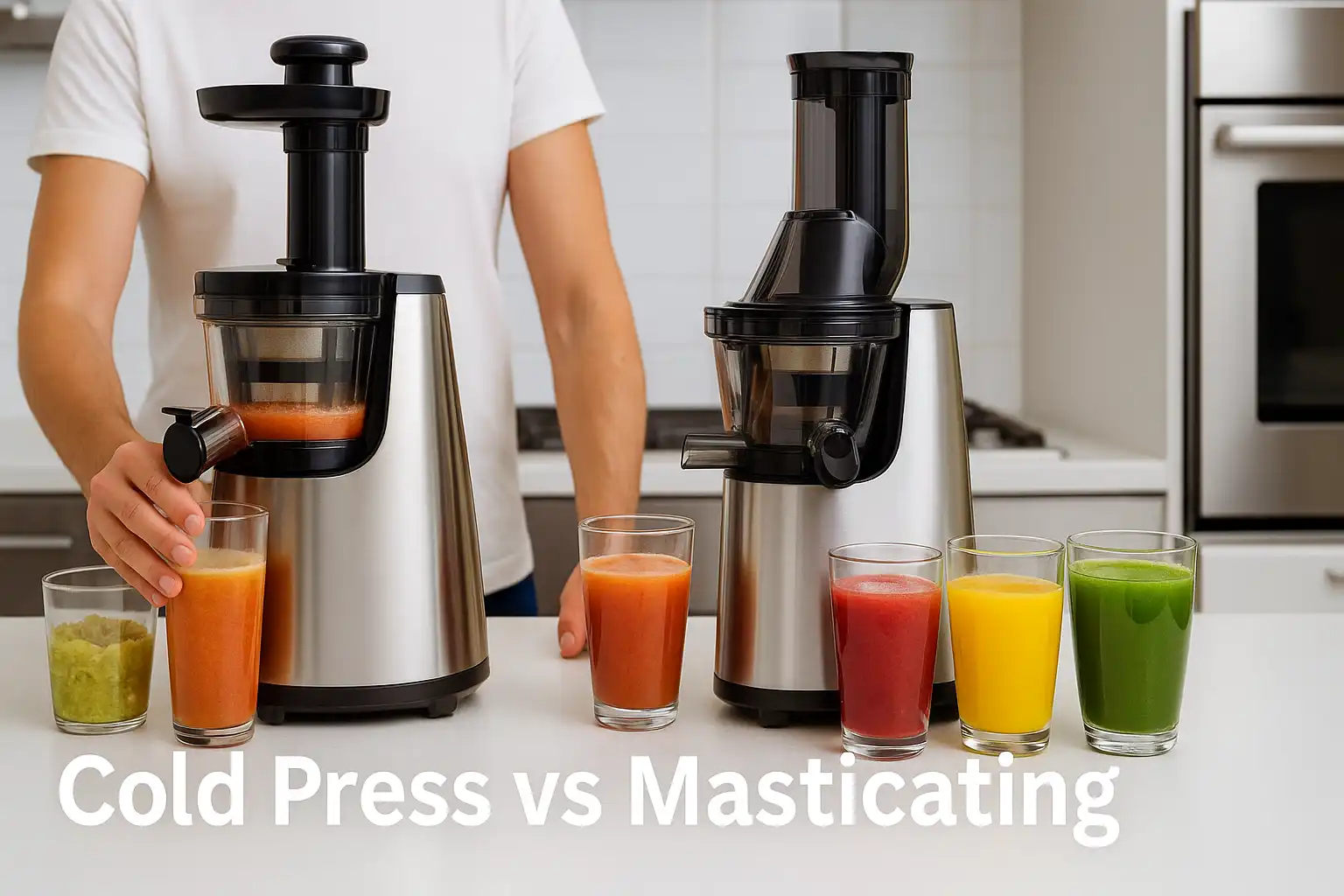
Cold press juicer means the same thing. That is, the slow, auger-based machine that crushes produce to get at the juice at a low speed.
Both employ an auger, operate around 40 to 120 RPM, and seek to minimize heat and foam for maximum yield and extended shelf life. Brands might call them something else, but the process remains the same.
To help you make a smart selection, we’ve focused on motor strength, construction, feed chute size, and cleaning requirements in regular use.
Understanding the Differences: Cold Press vs Masticating
Cold press juicers and masticating juicers are not exact synonyms; while both operate slowly to avoid heat, their juice extraction methods affect yield, consistency, and the quality juice produced.
What sets the mechanisms apart?

Masticating juicers have a solo auger which masticates produce at approximately 80 to 100 RPM. The slow spin reduces heat and air in the juice, which preserves vitamins and color.
Cold press juicers run a two-step method: grind, then press. Following a coarse grind, a hydraulic (or sometimes mechanical) press squishes the pulp under extreme pressure. This typically extracts more juice from leafy greens, wheatgrass, and soft fruits and results in drier pulp than most single-auger models.
Most brands like to mix the two up in marketing. If you see ‘cold press’ on a single-auger model, see if it really has a press stage or if it’s just slow masticating.
Compare yield, texture, and shelf life
Cold press units tend to win on yield, especially for kale, herbs, and beets. If you juice expensive ingredients, that extra 5-15 percent adds up over a month.
Texture leans pulpy on both systems compared to centrifugal. Anticipate more body and fine pulp, creating a smoothie-light feel, though you can strain for a cleaner sip.
Both provide juice that lasts three to five days in the refrigerator at zero to four degrees Celsius in a closed bottle. Less heat, less air, less fast separation and taste loss. For hectic weeks, that’s a big advantage over juice that dies by the next day.
Noise, speed, and daily use
Masticating machines are silent compared to the din of centrifugal models. You can run one early in the morning without disturbing the home. Cold press arrangements are different. The press isn’t noisy, but the grinder gives off a soft rumble.
Time is the sacrifice. A masticating batch typically requires at least 5 minutes, although this may vary with hard carrots versus soft pears. A complete cold press workflow can take longer because you feed, grind, and then press.
If you juice once a day, masticating can seem easier. If you do large weekend batches, cold press can pay off with greater yield.
Nutrients and practicality
Both centrifugal juicers are best for nutrient retention because low RPM means less heat buildup and oxidation. That’s why flavor keeps and color stays vibrant.
If you want convenience and a smaller footprint, go masticating. If you want the driest pulp and top yield, select an authentic grind-and-press cold press. For mixed produce, such as apples, citrus, and spinach, both with a quick strain make for a lighter mouthfeel.
Performance Metrics: Juice Yield, Oxidation, Noise, Maintenance
Cold press juicers and masticating juicers typically refer to the same slow juicing process, but numerous purchasers compare them to fast juicers like centrifugal juicers. The metrics below break down what slow juicer types actually do well and where the trade-offs surface in daily use.
Juice Yield
Yield varies based on speed, pressure, and type of produce when using different juicer types. With masticating units, the slow run and pulp pressing means more juice gets pulled from leafy greens, herbs, wheatgrass, and dense things like carrots and beets. This is why they outperform centrifugal juicers on kale or parsley by an obvious margin. Cold press juicing techniques enhance the quality juice extracted from these ingredients.
Soft fruit is a bit closer. With riper oranges, pineapples, or berries, both styles can do well, but prep counts. Peel citrus if the device manual requires it. Some augers grip better on peeled segments, which increases yield and decreases peel-derived bitterness, leading to a better juicing experience.
With apples, cut to fit and remove bruised spots to prevent wet pulp. If you’re just doing a quick check, compare pulp dryness. Fine, crumbly pulp indicates high juice extraction. Wet, stringy pulp represents lost juice and less bang per kilo of produce.
Oxidation and Foam

Cold press machines operate at slow speeds which restrict air mixing. Less air leads to less oxidation, resulting in better color and more heat-sensitive nutrients preserved in the glass. Most users experience a thicker body and slower separation in the bottle, which comes in handy if you keep juice in the fridge for a day.
Centrifugal models churn up air and form foam. That foam accelerates spoilage and flattens flavor over time. If you have to have a fast model, skim foam, fill bottles to the rim and chill immediately. It helps, but it can’t compare with the slower oxidation rate of a masticating unit.
Noise

Masticating models use slow motors and an auger, so they run quiet enough for early mornings or late nights in small flats. Most hum rather than roar.
Centrifugal units have high-RPM motors and spinning baskets. They tend to vibrate more and sound louder, which is a concern in communal environments.
Maintenance
Expect more parts on masticating units: auger, screen, cap, wiper, and seals. Cleanup takes longer, and a batch can take five minutes or more to run, depending on produce. Utilize a soft brush on the mesh and rinse immediately after juicing to prevent stuck fiber.
The compromise is longevity. Many slow juicers are constructed with beefier gearboxes and thicker screens, so they usually outlive the average centrifugal unit. Maintaining your juicer blades or screens in good shape, following the peel-and-cut instructions in the manual, and drying parts after use can help prevent premature wear.

Exporter Considerations: Market Demand by Region, Certifications, Logistics
Cold press and masticating (slow) juicers are often interchangeable but buyers use both. For exporters, map demand, validate certifications, and plan cross-border logistics around that reality.
Market demand by region
The global juicers market size was USD 2.8 billion in 2024 and is expected to grow at a CAGR of 7.2% between 2025 and 2034. The U.S. Tops North America at USD 500 million in 2024 with an anticipated 7.7% CAGR. Buyers want motors that outlast, low-noise operation, and effortless cleanup with more intent for “cold press” naming in product listings and advertising.
Asia Pacific accounted for approximately 31.4% of the market share in 2024 and is expected to grow around 7.7% CAGR. This growth is linked to urban migration, rising middle-class spending in China, India, and Japan, and a greater awareness of the benefits of fresh juice at home. Compact footprints and multi-volt compatibility make these juicer types especially appealing in dense urban areas.
Japan and Korea show a strong demand for premium slow juicers that excel in nutrient preservation. Buyers are particularly focused on RPM, auger material, and juice yield from leafy greens. Local brands maintain high standards regarding fit, finish, and warranty.
Europe continues to be a significant market fueled by wellness and low-sugar diets. Northern and Western Europe tend to prefer BPA-free plastics, quiet motors, and the availability of spare parts. Retailers like third-party test results on yield, pulp dryness, and noise.
The online retail channel continues to gain share globally because of the e-commerce reach and convenience. Highly engaging, SEO-optimized product pages featuring clear “cold press/masticating” taxonomy, 360° images and short cleaning videos outperform. Review and replacement part availability raises conversion and cuts return.
What certifications matter and where
When considering the safety and compliance of kitchen appliances like a juicer, it’s essential to focus on materials and energy efficiency. For the U.S., aim for UL listing and FCC compliance for electronics, ensuring that your appliance can deliver quality juice while adhering to FDA food-contact standards. California Prop 65 labeling is also required where applicable, especially for juicer types that handle sensitive nutrients.
For the EU and EEA, CE marking is required with RoHS and REACH for substances and food-contact compliance under Regulation (EC) No 1935/2004. Think GS for Germany to demonstrate a bit more safety stringency.
Japan’s PSE certification covers many electrical products, including juicers, and South Korea’s KC certification is also important. Both markets are increasingly looking for BPA-free claims supported by lab reports, especially in the juice business.
Lastly, it’s vital to maintain multilingual manuals and conformity files for your juicer model, ensuring you update test reports whenever you switch parts, molds, or suppliers to meet specific needs in different markets.

Plan logistics and after-sales
Select SKUs with dual voltage (100 to 120 V and 220 to 240 V) or regional variants. Package to pass ISTA drop tests and put spare gaskets in to minimize service calls.
Match HS codes for juicers, tariffs, and prep DDP versus DAP per channel. Stock fast-movers and wear parts in regional hubs. Exporter considerations include market demand by region, certifications, and logistics.
Provide a 24 to 48 hour turnaround on parts requests. Augers, screens, and seals fuel repeat sales and reviews.
ElectMix Dual‑Technology Offering and Client Successes
ElectMix caters to operators who require both a cold press juicer and high-speed blending options to satisfy diverse menus, wellness trends, and regional regulations without confining them to either.

What sets dual‑technology apart?
Dual-technology lets customers choose the right tool for the job on any day. Cold press juicers run at 40 to 80 RPM in order to extract more vitamins and minimize heat buildup. High-speed blenders operate at 20,000 to 30,000 RPM to shred fiber and provide dense, quick beverages.
These speeds shape the result: cold press for clear, smooth juice with higher nutrient retention and high-speed for creamy, high-fiber blends and fast service during rush hours. It fills compliance gaps as well. Some kitchens require sealed systems or specific materials in order to get through an inspection.
The rest have to provide allergen separation or noise limits. A dual-configuration setup spans more situations with less tradeoff.
Match tools to use cases
- Smoothie bars and quick‑serve cafés depend on high‑speed blenders. They process frozen fruit, nut butters, and ice without stalling, which means orders flow quickly and texture remains consistent.
- Health-oriented markets like cold press, wellness shops, hotel spas, and corporate wellness programs want nutrient-dense, low-oxidation juice that keeps color and flavor longer in the fridge.
- North American menus soft-sell fiber-loaded beverages. Centrifugal and high-speed blending answer that need with textured, pulp-rich drinks.
- Multi-site operators mix both to craft unique SKU lines: cleanses with cold-pressed greens, blended bowls, and protein shakes for post-workout crowds.
Choose specs that fit the space
ElectMix provides 2.0 L Tritan jars with noise enclosures to reduce sound in tight counters and open lobbies. Operators can spec 2200 W peak motors for dense loads like acai and frozen mango. Touch control panels guide employees to deliver consistent recipes from shift to shift with no guesswork, which saves on training time and waste.
Certifications count. CE, CB, LFGB and ETL listings demonstrate adherence to established safety and food-contact standards. This assists with worldwide sourcing, insurance audits and city approvals.

Client results with ElectMix
A university food hall utilized high-speed machines for morning rush smoothies and cold press for grab-and-go bottles. Waste fell by 12 percent after switching to touch presets and 2.0-liter batches. The noise enclosure maintained lines cool in the vicinity of study carrels.
A boutique gym chain in the Middle East deployed cold-pressed citrus and ginger shots for retail fridges, while bars used 2200 W blenders for post-class shakes. Sales increased as members were able to choose between refreshing clear juice or hearty blends depending on objectives.
Learn more at ElectMix: Professional blender and juicer manufacturer, supplier https://electmix.com
Next Steps: How to Validate Your Specification Sheet
This validates your sheet to real needs and real-world use. For cold press juicers, also known as masticating juicers, the terminology is blurred in marketing, so pay attention to how the juicer types operate rather than the name.
Map specs back to source documents
Validate each line item to the original brief and design notes. Motor power, auger speed of 40 to 120 rpm, feed chute size in millimeters, yield targets by produce type, and noise limits should trace to a requirement.
Take notes. Holes. For example, if the brief requests celery-friendly throughput of 1.0 kg in 5 minutes and your sheet doesn’t have a throughput metric, mark it. Address conflicts immediately, such as a compact footprint objective compared to a 500 ml pulp bin.
Check completeness, clarity, and feasibility
Confirm you list all core parameters: performance (yield %, pulp moisture), safety (overheat cut-off, interlock), and compliance (electrical marks).
Next Steps: Validate your spec sheet by using clear units and ranges. For instance, skip the diluted language like “high juice quality.
Stress-test feasibility with sample numbers. A 150 W motor might be appropriate for 60 rpm. Claiming 0.9 kg/min at that power is dangerous. If you’re asserting dishwasher-safe components, indicate max water temperature in degrees Celsius and materials like Tritan and 304 stainless steel.
Align with standards and regulations
Map to standards by market. For electrical safety, refer to the IEC/EN 60335 series. Include food-contact compliance for all wetted parts according to EU 10/2011 and FDA 21 CFR. If using BPA-free plastics, name the polymer.
Mention noise measurement method, such as dB(A) at 1 meter in a defined setting, ingress protection if relevant, such as IPX0 for kitchen gear, and plug types by region. This minimizes back-and-forth later.
Get stakeholder feedback
- Engineering: Confirm torque, thermal limits, and serviceability, including tool-free disassembly steps and seal life.
- Quality and compliance: Review test plans for life-cycle, such as 5,000 cycles, and cleaning.
- Marketing and support: Check claims that users will see, like leafy greens yield compared to apples.
Bring in a few end-users to test different juicer types. Have them put it together, juice 500 grams of kale and 500 grams of carrots, then log the setup, jam events, and clean-up in minutes.
Run prototypes or simulations
Construct a bench test. Yield by mass, oranges, apples, carrots, and leafy greens. Pulp moisture as a percent.
Next Steps: validate your spec sheet. Check rpm loading stability. If you can’t prototype yet, run motor torque and auger load simulations. Use results to fine-tune augers pitch or strainer hole size prior to tooling.
Iterate and lock revisions
Version-control your sheet to ensure a smooth juicing experience. After each review, record changes, justification, and test links for efficiency.
Conclusion
Cold press and masticating both refer to the same slow method. Brands use both. What matters more is build, auger design, motor torque and after‑sales support. Consider yield by weight, run time prior to heat increase, clean time per cycle and spare parts lead times. For export, see CE or CB scope, food‑grade parts and HS codes. Schedule freight in CBM, not only kgs.
To go quick, test 2 SKUs, side by side. For instance, process 1 kilogram of carrots, 1 kilogram of apples, and 500 grams of kale. Log yield in milliliters, pulp wetness by hand squeeze, and noise in decibels at 1 meter. Give your buyer that sheet.
Ready to pin specs or sample units? Leave your target price, MOQ and regions. Let’s map out the next steps.
Frequently Asked Questions
Are cold press and masticating juicers the same?
They’re identical in effect. The term “cold press” refers to masticating juicers, which are known for their efficient juice extraction process. Both types use slow-speed augers to crush and press produce, minimizing heat and oxidation, unlike fast centrifugal juicers.
Which delivers higher juice yield?
Masticating (cold press) juicers, known for their efficiency, tend to produce more nutritious juice, particularly from leafy greens and fibrous vegetables. Their slow press extraction process crushes out more juice and nutrients, saving you produce money in the long run.
Do masticating juicers reduce oxidation?
Yes. The slow extraction process of a cold press juicer minimizes heat and air exposure, helping to preserve enzymes, color, and flavor. This method allows for nutritious juice to be stored in the fridge for 48 to 72 hours if sealed and kept cold.
How loud are cold press/masticating juicers?
They’re silent, which is a significant advantage for home juicers. Most operate below 70 dB, similar to a normal conversation, making them ideal for early morning juicing or small cafes.
Are they harder to clean than centrifugal models?
Cleaning a juicer is moderate but doable, as most juicer types feature fewer, larger components. Rinse right after juicing, and several parts are dishwasher safe; consult the manual to verify.
What should exporters consider by region?
Look for green juice demand, warranty expectations, and plug standards when considering different juicer types. Check for required certifications such as CE, UKCA, and ETL to ensure quality juice extraction. Design packaging for extended shipping and moisture, while also providing replacement parts and clear instructions to minimize returns.
How does ElectMix’s dual-technology help buyers?
ElectMix is a new type of juicer that combines slow masticating with a gentle press stage, offering a unique juicing experience. Customers buzz about increased yield and crystal clear juice, thanks to its efficient extraction process that minimizes foam and enhances the shelf life of nutritious juice.

Marketing & Product Lead at ElectMix | Innovating Commercial Blenders & Home Appliances | Driving Growth & Development